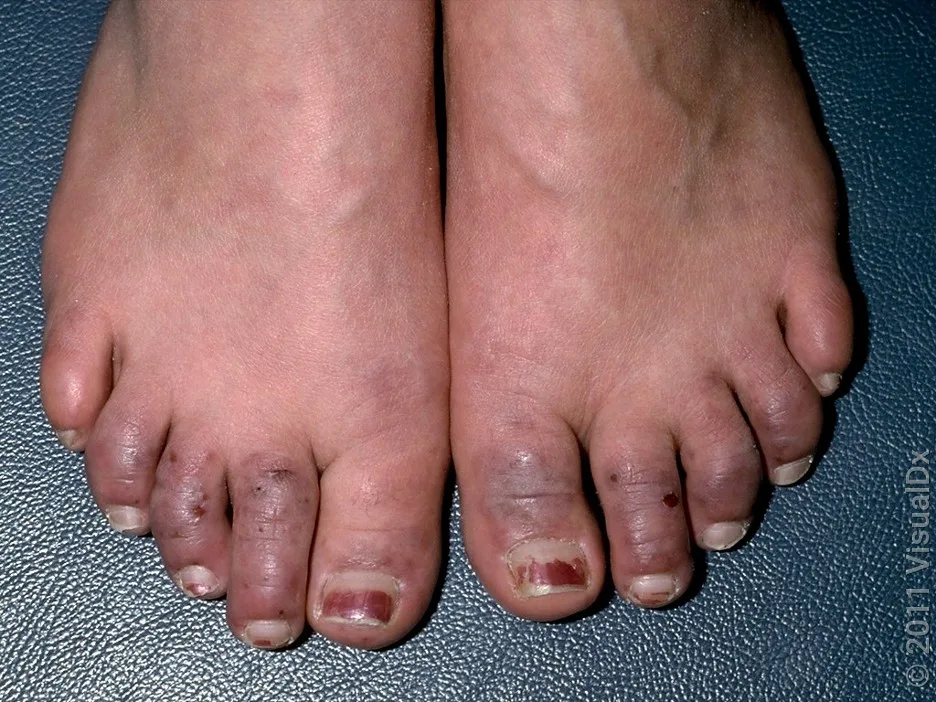
You step outside on a chilly morning, and a few minutes later your toes look white or even blue. Later, as they warm, they may turn bright red and throb. Color changes like these can be alarming. Two very different conditions often explain them: Raynaud’s phenomenon and peripheral artery disease.
Both conditions affect blood flow to the toes and fingers. Both can make your feet feel cold. However, they have different causes, different risks, and very different treatments. Knowing how Raynaud’s vs. PAD compare can help you decide when color changes are a nuisance and when they signal a deeper problem.
What Is Raynaud’s Phenomenon?
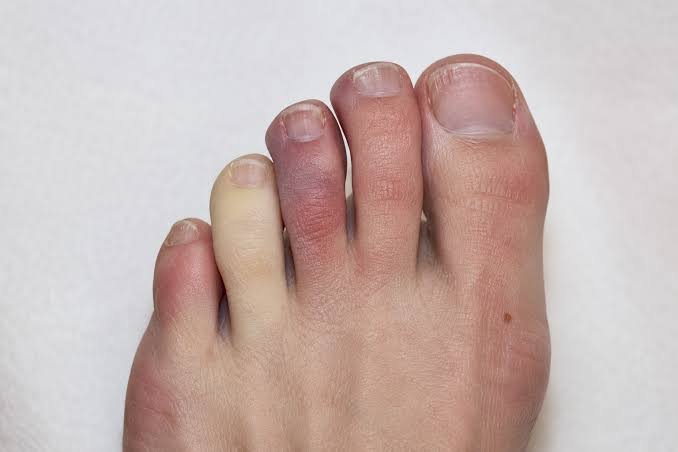
Raynaud’s phenomenon is an exaggerated reaction to cold or stress. Small arteries in the fingers and toes suddenly clamp down, a response called vasospasm. As a result, blood flow to the affected area drops sharply for a short time.
Doctors divide Raynaud’s into two types. Primary Raynaud’s is the more common form. It often starts between the ages of 15 and 30, affects women more often than men, and usually has no underlying disease. Secondary Raynaud’s develops because of another condition. Common causes include autoimmune diseases such as scleroderma and lupus, certain medications, and repeated vibration from power tools.
Primary Raynaud’s is usually mild and rarely causes lasting damage. Secondary Raynaud’s tends to be more severe. In some cases, it can lead to painful sores on the fingertips or toes.
What Is Peripheral Artery Disease?
Peripheral artery disease, or PAD, is a different problem altogether. Plaque made of fat, cholesterol, and other substances builds up inside the arteries over time. This process, called atherosclerosis, narrows the arteries that carry blood to the legs and feet.
Unlike Raynaud’s, PAD does not come and go. The narrowing is fixed and usually worsens slowly over years. Major risk factors include smoking, diabetes, high blood pressure, high cholesterol, kidney disease, and age over 65.
PAD matters well beyond the legs. The same plaque often builds up in the arteries of the heart and brain. For this reason, people with PAD face a higher risk of heart attack and stroke. A diagnosis is an important signal to protect your overall health.
How the Color Changes Differ
The pattern of color change offers one of the clearest clues.
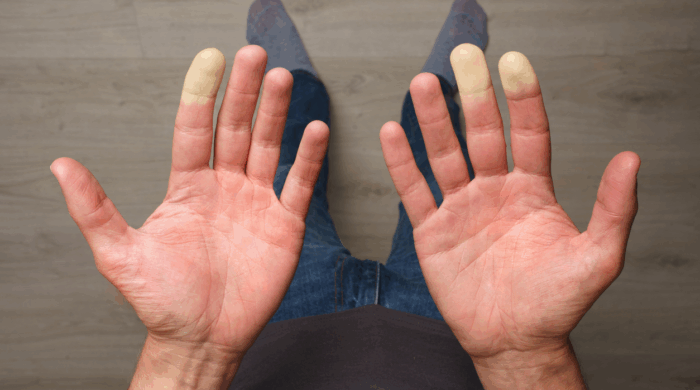
With Raynaud’s, attacks follow a sequence. Affected toes or fingers often turn white first as blood flow stops. They may then look blue as the tissue uses up its oxygen. Finally, they turn red as blood rushes back in. An attack usually lasts minutes, and the skin returns to normal once you warm up or calm down. The color change often has a sharp border, and it may affect only one or two digits.
PAD causes a more constant change. The foot may look pale when raised and turn dusky red when it hangs down for a while. Doctors call this dependent rubor. The skin may also look shiny, and hair on the toes or lower legs may thin. Toenails may grow slowly or thicken. These changes tend to stay in place rather than come and go in quick attacks.
Other Symptoms That Help Tell Them Apart
Beyond color, the two conditions behave differently in daily life.
Raynaud’s usually involves:
- Fingers more often than toes, although both can be affected
- Numbness, tingling, or throbbing during an attack
- Triggers such as cold air, cold drinks, air conditioning, or emotional stress
- Normal feeling and color between attacks
PAD usually involves:
- Leg muscle pain with walking that eases with rest
- One foot that stays colder than the other
- Weak or missing pulses in the feet
- Sores on the toes or feet that heal slowly
- Foot pain at night, in more advanced cases
Some people have both conditions at once. For example, an older smoker with Raynaud’s may also develop PAD. That is one reason a professional evaluation matters.
How Doctors Diagnose the Cause
A vascular specialist starts with your history and a careful exam. Questions about when symptoms appear, what triggers them, and how long they last often point toward the answer. Your doctor will also check the pulses in your feet and look closely at your skin and nails.
Testing then helps confirm the diagnosis. The ankle brachial index compares blood pressure in your ankle and arm and is a key test for PAD. A duplex ultrasound can show where an artery narrows. For suspected Raynaud’s, your doctor may order blood tests to look for autoimmune disease. In some cases, a magnified view of the tiny vessels at the nail base, called nailfold capillaroscopy, helps separate primary from secondary Raynaud’s.
Treatment for Raynaud’s
Most people with primary Raynaud’s manage it well with simple steps. Keeping your whole body warm matters, not just your hands and feet. Layered clothing, hats, warm socks, and gloves all help. Hand and foot warmers can be useful on cold days. Avoiding smoking and managing stress also reduce attacks.
If attacks happen often or cause pain, doctors may prescribe medication that relaxes blood vessels. Calcium channel blockers are a common choice. For secondary Raynaud’s, treating the underlying condition is a key part of care. Anyone who develops sores on the fingers or toes should see a doctor promptly.
Treatment for PAD
PAD treatment has two goals: easing leg symptoms and lowering the risk of heart attack and stroke. Quitting smoking is the most important step for anyone with PAD. Your doctor will also help you control blood pressure, cholesterol, and blood sugar. Many patients take a statin along with an antiplatelet medication such as aspirin.
A structured walking program can greatly improve how far you walk without pain. When symptoms limit daily life or blood flow is severely reduced, minimally invasive procedures can help. Options such as angioplasty, stenting, and atherectomy reopen blocked arteries through a small puncture, often without an overnight hospital stay.
Daily Habits That Protect Your Toes in Cold Weather
Whether you have Raynaud’s, PAD, or both, good habits can lower your risk of problems this winter.
Keep your core warm. When your chest and belly stay warm, your body sends more blood to your hands and feet. Wear layers, a hat, and a warm coat, even for short trips outside.
Choose the right socks and shoes. Thick wool or thermal socks hold heat well. Make sure your shoes fit with room to move your toes, since tight footwear can squeeze blood vessels.
Warm up slowly. After time in the cold, warm your feet with lukewarm water or by moving around. Avoid very hot water, heating pads, and space heaters aimed at your feet. Poor blood flow and reduced feeling can make burns more likely.
Check your feet every day. Look for color changes, cracks, blisters, or sores. Catching a small problem early can prevent a serious wound.
Stay active. Regular walking improves circulation for people with PAD. It also helps your whole body handle cold weather better.
Questions to Ask Your Doctor
A clear conversation with your doctor helps you understand your condition and your next steps. Consider asking these questions at your visit:
- Do my symptoms point to Raynaud’s, PAD, or something else?
- Which tests do I need, and what will they show?
- Could any of my medications be making my symptoms worse?
- How can I protect my feet from injury this winter?
- What warning signs mean I should call you right away?
Bring a list of your current medications and any past test results. If you can, take photos of your toes during an attack. These pictures can help your doctor see what happens when you are not in the office.
When to Seek Care Right Away
Some color changes need urgent attention. Go to an emergency room if a foot or leg suddenly becomes cold, pale, numb, and painful. This may mean a sudden blockage. Also seek prompt care for any sore on a toe or foot that does not heal within two weeks, or for skin that turns black. These signs suggest the tissue is not getting enough blood.
Do Not Ignore Toes That Change Color
Cold toes that briefly turn white or blue are often a sign of Raynaud’s, especially in younger people. In contrast, constant coldness, slow healing, and leg pain with walking point more toward PAD. Because the two conditions can overlap, the safest step is a simple vascular evaluation. A few painless tests can tell you which one you have and how to protect your circulation this winter.
The right diagnosis changes everything about care. Raynaud’s often needs only warmth, stress control, and sometimes medication. PAD calls for a plan that protects your legs, your heart, and your brain. Do not guess on your own. Book a visit, share what you have noticed, and get a clear answer before the coldest months arrive.