Visible veins on the legs are extremely common. Many people use the terms varicose veins and spider veins as if they mean the same thing. They do not.
The two conditions differ in size, depth, symptoms, and treatment. One is often a cosmetic concern. The other can signal a deeper problem with your circulation. This guide explains varicose veins vs spider veins so you know which you have and what to do about it.
How Leg Veins Work
Arteries carry blood away from the heart. Veins bring it back. In the legs, blood must travel upward against gravity.
Two things make that possible. Your calf muscles squeeze the deep veins with every step. Small one way valves inside the veins then keep blood from sliding backward.
When valves weaken, blood flows the wrong way and pools. Doctors call this venous reflux. Pressure builds inside the vein, and the vein stretches. That pressure sits behind both varicose and spider veins.
What Are Varicose Veins?
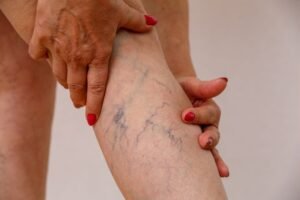
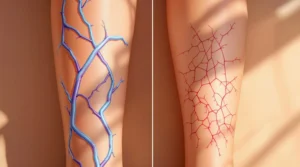
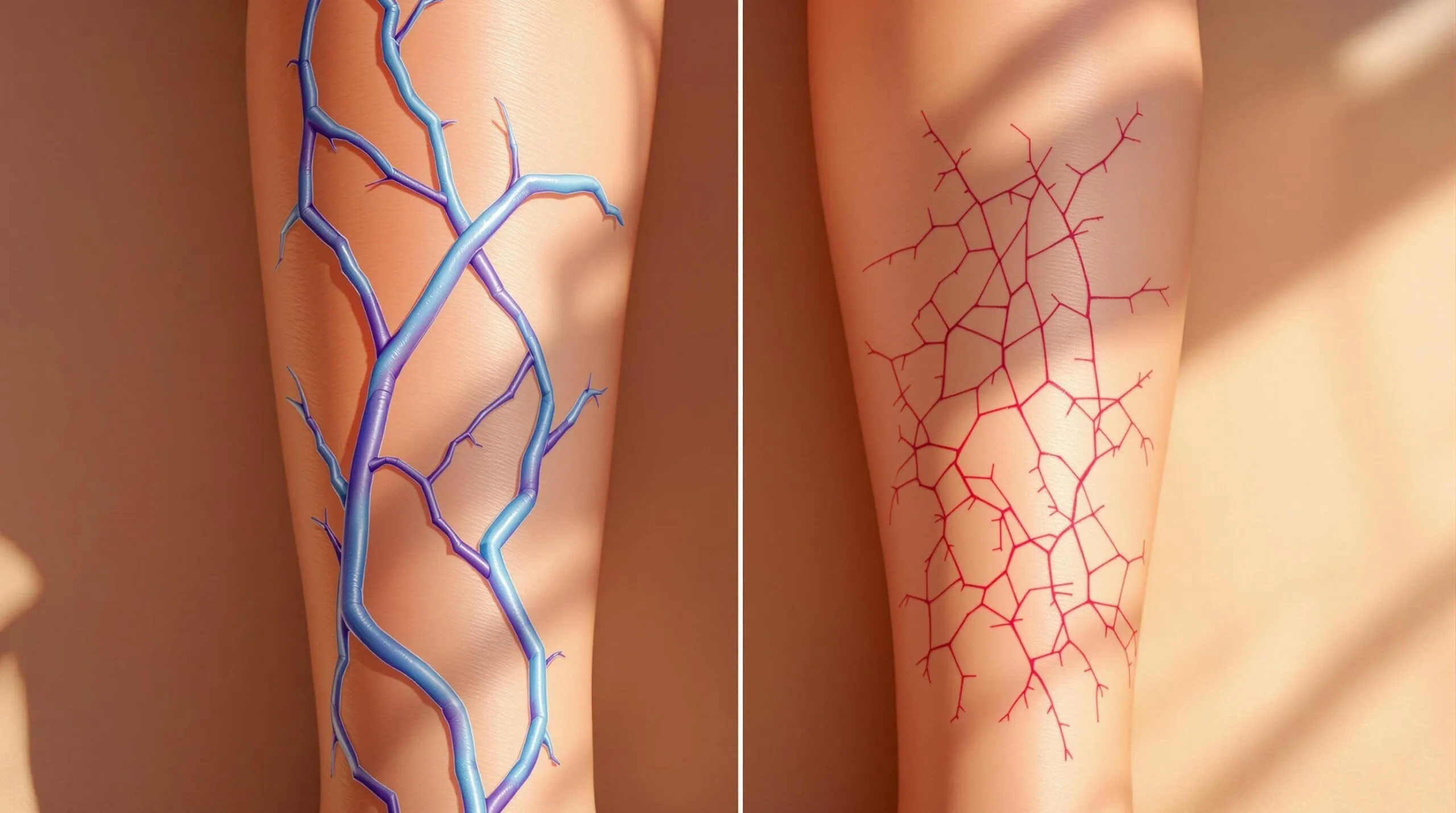
Varicose veins are enlarged veins that bulge above the skin surface. They look rope like, twisted, and usually blue or dark purple. Most measure more than 3 millimeters across.
They form in larger veins closer to the muscle. Because of their size and depth, they often reflect reflux in a major vein such as the great saphenous vein.
Symptoms of Varicose Veins
Many people have symptoms along with the visible veins:
- Aching, throbbing, or heavy legs
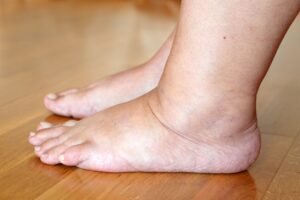
- Swelling in the ankles, usually worse at night
- Night cramps or restless legs
- Itching or burning over a vein
- Pain that worsens after standing for a long time
- Skin that darkens or thickens near the ankle
- Open sores near the ankle in advanced cases
Symptoms often improve when you raise your legs or walk. They worsen with long periods of standing.
What Are Spider Veins?
Spider veins are tiny vessels just under the skin surface. They appear as thin red, blue, or purple lines. The pattern often looks like a spider web or the branches of a tree.
Most measure about 1 millimeter or less. Doctors call them telangiectasias. Slightly larger blue vessels, around 1 to 3 millimeters, are called reticular veins.
Spider veins appear most often on the thighs, calves, and ankles. Some people get them on the face.
Symptoms of Spider Veins
Most spider veins cause no physical symptoms at all. Some people report mild burning, itching, or a dull ache over a cluster. In general, though, they are a cosmetic concern.
Key Differences at a Glance
Here is how the two compare:
- Size: Varicose veins measure more than 3 millimeters. Spider veins measure about 1 millimeter or less.
- Appearance: Varicose veins bulge and twist. Spider veins are flat, thin lines.
- Color: Varicose veins look blue or dark purple. Spider veins look red, blue, or purple.
- Depth: Varicose veins sit deeper. Spider veins sit right at the skin surface.
- Symptoms: Varicose veins often ache and swell. Spider veins usually cause nothing.
- Health risk: Varicose veins can lead to skin damage and ulcers. Spider veins rarely do.
- Insurance: Plans often cover varicose vein treatment when symptoms exist. They rarely cover spider vein treatment.
Shared Risk Factors
Both conditions share many of the same causes:
- Family history: Genetics play a strong role in both.
- Age: Valves weaken over the years.
- Sex: Women develop both more often than men.
- Pregnancy: Blood volume rises and hormones relax vein walls.
- Hormones: Birth control pills and hormone therapy can contribute.
- Long periods of standing or sitting: Blood pools when calf muscles stay still.
- Extra body weight: More weight means more pressure on leg veins.
- Sun exposure: This mainly affects spider veins on the face.
Can Spider Veins Signal a Bigger Problem?
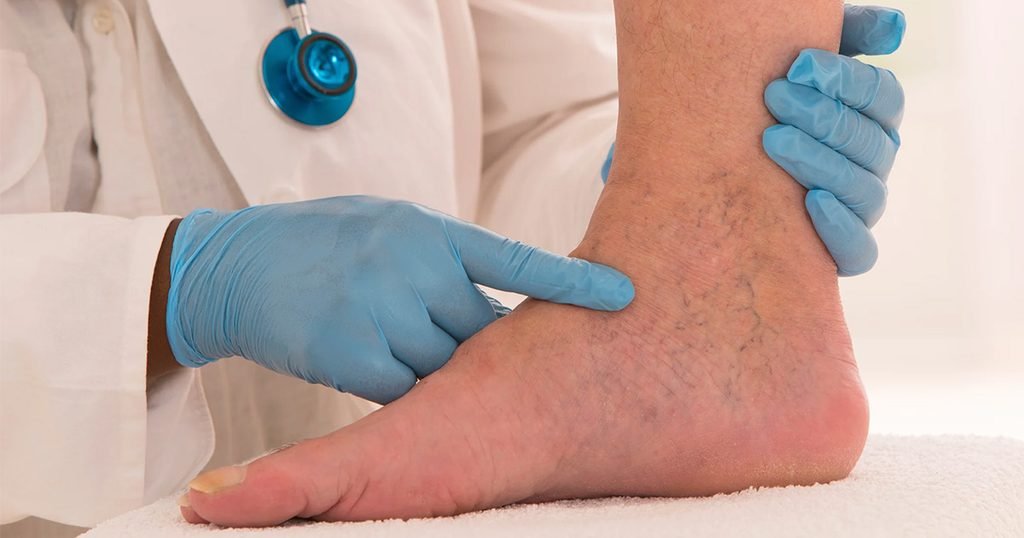
Sometimes, yes. Spider veins alone usually mean little. However, a large cluster near the ankle can be a sign of higher pressure in the deeper veins.
Watch for these clues that the problem runs deeper:
- Ankle swelling along with the spider veins
- Aching or heaviness at the end of the day
- Skin darkening near the ankle
- Spider veins that keep returning after treatment
If any of these apply, ask for a duplex ultrasound before cosmetic treatment. Treating surface veins without fixing the source often leads to disappointment.
Treatment Options
Treating Spider Veins
- Sclerotherapy: A doctor injects a medicine that irritates and closes the vein. This remains the standard treatment for leg spider veins.
- Surface laser: Laser energy heats the vessel through the skin. Doctors often prefer this for facial veins and very tiny vessels.
Most people need two or more sessions. Results appear gradually over several weeks.
Treating Varicose Veins
- Compression stockings: These ease aching and swelling but do not remove veins.
- Thermal ablation: Heat from a laser or radio waves seals a large faulty vein from the inside.
- Medical adhesive: A special glue closes the vein without heat.
- Foam sclerotherapy: Foamed medicine treats larger or twisting veins.
- Phlebectomy: A doctor removes bulging veins through tiny skin nicks.
Treatment often combines methods. Doctors typically close the leaking source vein first, then treat the branches.
What to Expect From Treatment
Both treatments take place in an office and need little downtime. Most people walk right afterward and return to normal activity the same day or the next.
You will likely wear compression stockings for a period. Bruising and tenderness are common and fade over weeks. New veins can appear over time, so follow up visits help.
What a Vein Evaluation Involves
A proper evaluation starts before any treatment decision. Your specialist will ask about aching, swelling, cramps, and how your legs feel at the end of the day. They will examine your legs while you stand, since veins fill under gravity.
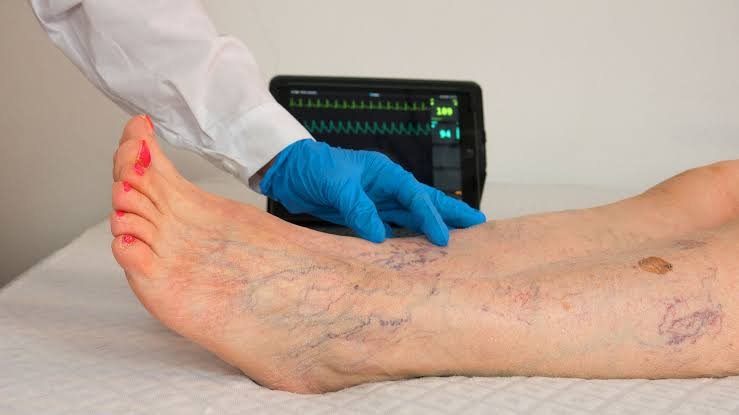
The key test is a duplex ultrasound. A technician moves a probe along your legs and watches blood flow on a screen. The scan shows which veins leak, how badly, and in which direction blood travels. It takes about 30 to 45 minutes and causes no pain.
Results guide everything that follows. Reflux in a saphenous vein usually calls for ablation first. Normal deep and saphenous veins mean surface treatment alone may be enough.
Common Myths
A few beliefs come up often in vein clinics:
- Crossing your legs causes varicose veins. It does not. Genetics, age, and pressure inside the veins do.
- Only older people get them. Veins can appear in your twenties, especially with a family history.
- Treatment means a hospital stay. Modern treatments happen in an office in under an hour.
- Removing a vein harms circulation. Blood simply reroutes through healthy veins nearby.
- Exercise makes veins worse. Walking helps, because the calf muscle pump moves blood upward.
Prevention Tips
Nothing prevents vein problems entirely, especially with a family history. These habits help:
- Walk daily to activate your calf muscle pump.
- Avoid standing or sitting still for hours at a time.
- Raise your legs when you rest.
- Keep a healthy weight.
- Wear compression stockings during long trips or long shifts.
- Avoid very hot baths and prolonged sun exposure.
Choosing a Vein Specialist
Several types of doctors treat veins. Vascular surgeons, interventional radiologists, and some dermatologists all perform vein procedures. Training and focus vary widely.
A few questions help you compare:
- Do you perform a duplex ultrasound before recommending treatment?
- Which treatments do you offer, and which do you recommend for me?
- How many of these procedures do you perform each year?
- What does follow up look like?
- What will my out of pocket cost be?
A clinic that recommends treatment without an ultrasound is skipping the step that matters most.
Check coverage before you book. Ask the office to verify your benefits and give you a written estimate. Insurers often require documented symptoms and a trial of compression stockings before they approve varicose vein treatment.
Frequently Asked Questions
Do spider veins turn into varicose veins?
No. They are different types of vessels. However, both can come from the same underlying vein problem.
Are varicose veins dangerous?
They are rarely life threatening. Left untreated, though, they can cause skin damage, bleeding, clots in surface veins, and ulcers.
Will insurance pay for treatment?
Plans often cover varicose vein treatment when you have documented symptoms. Spider vein treatment is usually considered cosmetic.
Can spider veins come back after treatment?
Yes. Treated vessels usually stay closed, but new ones can form over time. Touch up sessions are common every few years.
Which treatment is right for me?
That depends on what a duplex ultrasound shows. A vein specialist can map your veins and recommend a plan.
The Bottom Line
In the varicose veins vs spider veins comparison, size and depth tell most of the story. Varicose veins bulge, often ache, and can lead to skin problems. Spider veins are thin surface lines that usually cause no harm. Both respond well to office treatments. If you have leg swelling, aching, or skin changes, start with a duplex ultrasound so treatment addresses the real source.
This article is for general education only. It does not replace advice from your own doctor or vein specialist.
Sources
- Gloviczki P, Lawrence PF, Wasan SM, et al. Clinical Practice Guidelines for the Management of Varicose Veins of the Lower Extremities. Part I. Journal of Vascular Surgery: Venous and Lymphatic Disorders. 2023.
- Gloviczki P, Lawrence PF, Wasan SM, et al. Clinical Practice Guidelines for the Management of Varicose Veins of the Lower Extremities. Part II. Journal of Vascular Surgery: Venous and Lymphatic Disorders. 2024.
- National Heart, Lung, and Blood Institute. Varicose Veins.
- National Institute of Diabetes and Digestive and Kidney Diseases. Chronic Venous Insufficiency.
- Office on Women’s Health, US Department of Health and Human Services. Varicose Veins and Spider Veins.