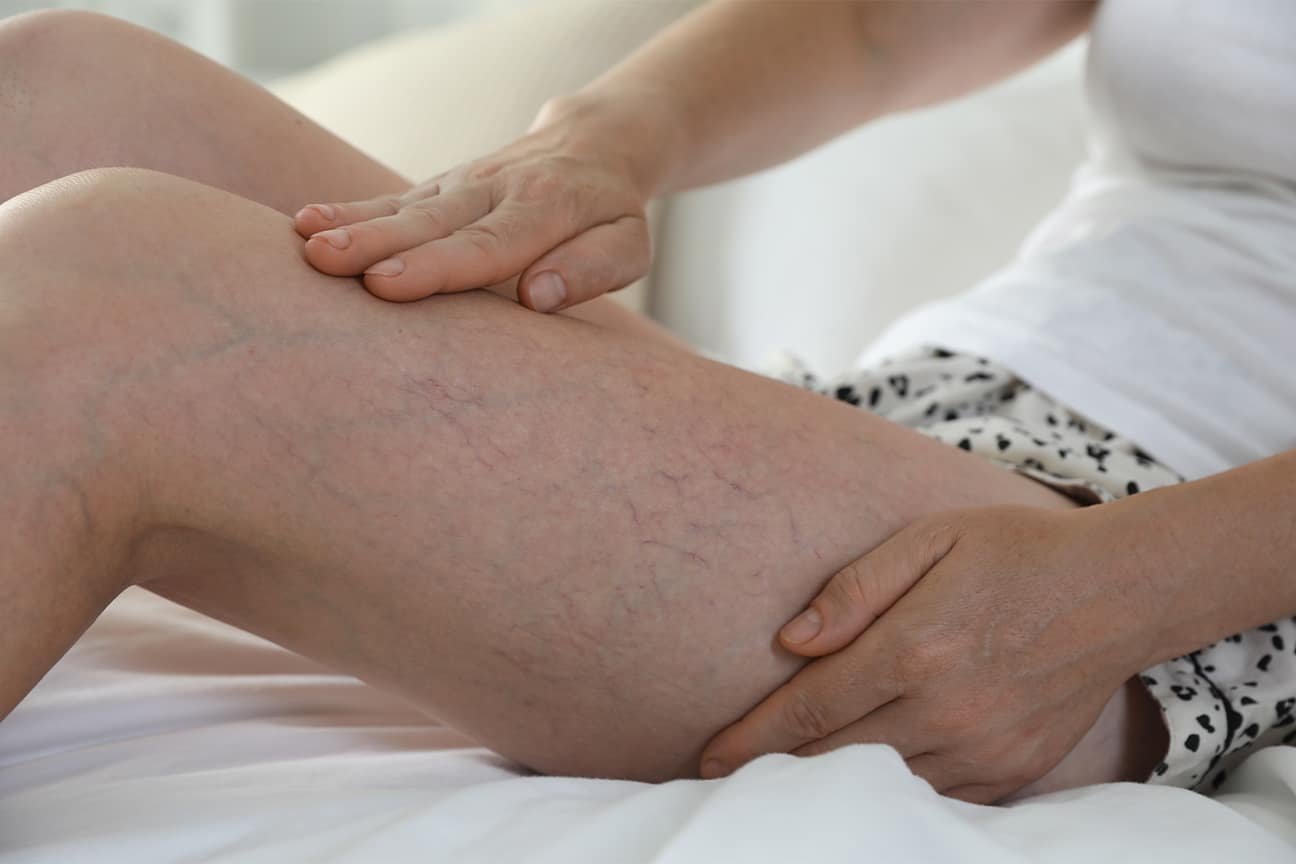
If your mother or father had bulging leg veins, you may wonder whether you will get them too. It is a fair question. Varicose veins often show up in several members of the same family.
Research gives a clear answer: genes matter a great deal. Your genes are only part of the story, though. Your weight, your job, and your daily habits all play a role too. This guide explains what science says about inherited vein disease, what else raises your risk, and what you can do about it.
What Are Varicose Veins?
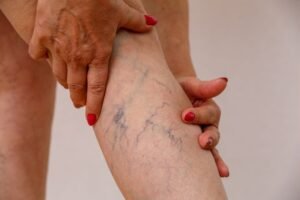
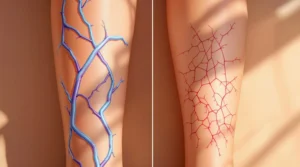
Varicose veins are swollen, twisted veins that you can see under the skin. They usually appear on the legs. Healthy leg veins have small one way valves that keep blood moving up toward the heart. When these valves weaken, blood flows backward and pools in the vein.
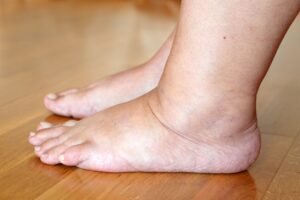
Over time, the extra pressure stretches the vein wall. The vein then bulges and becomes visible. Many people have no pain at all. Others notice aching, heaviness, swelling, itching, or night cramps.
So, Are Varicose Veins Hereditary?
Yes, in large part. Family history is one of the strongest known risk factors for varicose veins. Most people with varicose veins report at least one affected relative.
What Family Studies Show
A well known French study examined 134 families in a clinic setting. Doctors examined both the patients and their parents in person, not by questionnaire. The results showed a strong family pattern:
- When both parents had varicose veins, about 90% of children developed them.
- When one parent was affected, about 62% of daughters and 25% of sons developed them.
- When neither parent was affected, about 20% of children still developed them.
These numbers come from one group of families, and your own risk may differ. The pattern remains striking.
What Heritability Means
Scientists use the word heritability to describe how much of the difference between people comes from genes. A German study of more than 16,000 people in 4,000 families estimated the heritability of chronic venous disease at about 17%.
That number may sound low next to the family study above. The two measure different things. Heritability looks at a whole population. A family study looks at one family at a time. Families also share habits, body types, and jobs, not only genes.
What Genetic Research Has Found
Modern studies scan the whole genome for small differences linked to disease. One large analysis published in 2022 looked at more than 800,000 people. It found more than 100 regions of the genome tied to varicose veins.
No single gene causes the condition. Instead, many small genetic differences add up. Several of them affect how the body builds and maintains blood vessel walls and valves.
What You Actually Inherit
You do not inherit varicose veins themselves. You inherit traits that make them more likely. These traits may include:
- Weaker connective tissue in the vein walls
- Valves that do not close as tightly
- Veins that stretch more easily under pressure
- A tendency toward taller height or certain body shapes
Think of it as a starting point, not a verdict. Your genes set the baseline. Your life shapes what happens next.
Varicose Veins and Pregnancy
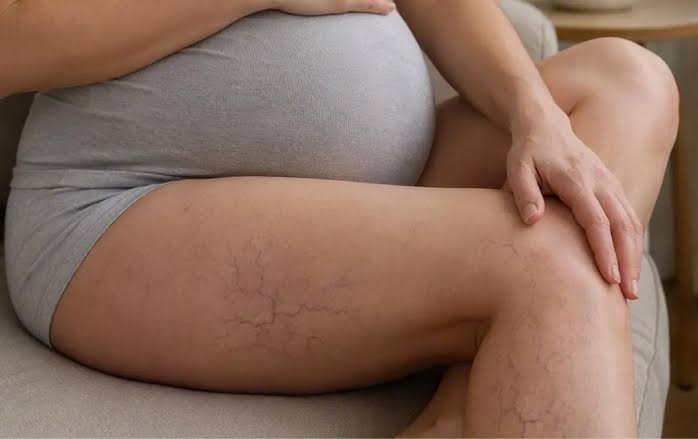
Pregnancy brings out vein problems in many women who have a family history. Three changes drive this. Blood volume rises sharply. Hormones soften the vein walls. The growing uterus presses on the large veins in the pelvis.
Veins often appear during a first pregnancy and worsen with each one. Most improve within three to six months after delivery. Some stay for good.
A few steps help during pregnancy:
- Wear maternity compression stockings.
- Sleep on your left side to ease pressure on the main vein.
- Raise your legs during the day.
- Walk daily as your doctor allows.
- Avoid standing still for long stretches.
Most doctors wait until after delivery and breastfeeding to treat veins. Report any painful, swollen leg at once. Pregnancy raises the risk of blood clots.
Other Risk Factors That Matter
Several risk factors have nothing to do with your family tree. Some you can change, and some you cannot.
Factors You Cannot Change
- Age: Vein valves wear down over the years, and risk rises with each decade.
- Sex: Women develop varicose veins more often than men. Hormones likely explain part of this gap.
- Pregnancy: Blood volume rises and the growing uterus presses on leg veins. Veins often improve after delivery, but some remain.
- Past blood clot: A deep vein thrombosis can damage valves permanently.
Factors You Can Change
- Extra body weight: More weight raises pressure in the leg veins.
- Long hours standing or sitting: Blood pools when your calf muscles stay still.
- Low activity level: Walking pumps blood out of the legs.
- Smoking: Tobacco harms blood vessels throughout the body.
Making Your Family History Useful
Your family history is medical information worth collecting. Ask your parents, siblings, aunts, and uncles a few direct questions:
- Did they have bulging leg veins?
- Did anyone need vein surgery or injections?
- Did anyone have an open sore near the ankle?
- Did anyone have a blood clot in the leg or lung?
That last question carries extra weight. A family history of clots may point to an inherited clotting disorder, which is a separate problem from varicose veins. Share what you learn with your doctor. A clear family picture helps your doctor decide how closely to watch your legs over the years.
Can You Lower Your Risk?
You cannot change your genes. However, you can reduce the pressure on your veins and ease symptoms. Try these steps, especially if vein problems run in your family:
- Walk every day to keep your calf muscles pumping.
- Take short standing or walking breaks during long periods of sitting.
- Shift your weight and flex your ankles if your job keeps you on your feet.
- Raise your legs above heart level for 15 minutes a few times a day.
- Keep a healthy weight.
- Wear compression stockings if your doctor recommends them.
- Avoid long, hot baths, since heat widens veins.
No habit can guarantee clear legs. These steps do help many people delay symptoms and feel better day to day.
When to See a Doctor
Visible veins alone are not an emergency. Make an appointment if you notice:
- Aching, heaviness, or swelling that affects your daily life
- Skin near the ankle that darkens, thickens, or feels hard
- Itching or a rash over a vein
- An open sore near the ankle that will not heal
- A vein that becomes hard, red, and tender
- Bleeding from a vein
Seek urgent care if one leg swells suddenly with pain, warmth, or redness. These can be signs of a blood clot.
How Doctors Diagnose and Treat Varicose Veins
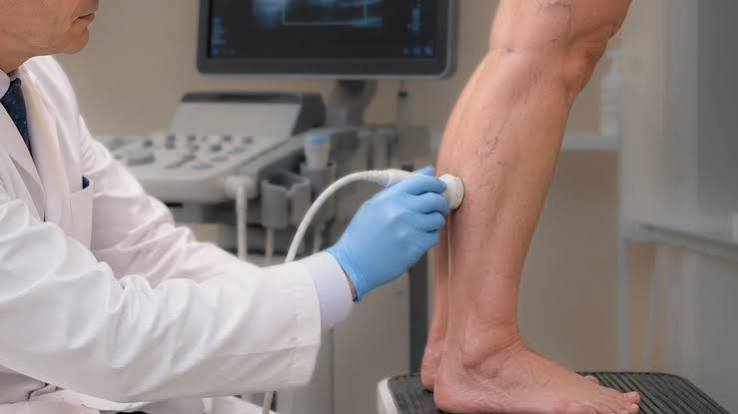
Your doctor will examine your legs while you stand. Next, they will likely order a duplex ultrasound. This painless scan shows how blood moves through your veins and whether your valves leak.
Treatment depends on your symptoms and what the scan shows. Options include:
- Compression stockings: These ease aching and swelling.
- Sclerotherapy: A doctor injects medicine that closes small veins.
- Thermal ablation: Heat from a laser or radio waves seals a larger faulty vein.
- Medical adhesive: A special glue closes the vein without heat.
- Phlebectomy: A doctor removes bulging veins through tiny skin nicks.
Most of these treatments take place in an office and need little recovery time. Insurance often covers treatment when symptoms affect your health. Cosmetic treatment of spider veins is usually an out of pocket cost.
Frequently Asked Questions
If my mother has varicose veins, will I get them?
Your risk is higher than average, but nothing is certain. Many people with a strong family history never develop serious vein problems.
Can I be tested for a varicose vein gene?
No useful test exists today. Many genes contribute a small amount each, and a single test cannot predict your risk.
Do varicose veins skip a generation?
Not in a predictable way. Because many genes are involved, the pattern can look uneven from one generation to the next.
Can men inherit varicose veins?
Yes. In family studies, sons of an affected parent face a lower risk than daughters. The risk remains real. Men often seek care later, once symptoms have advanced.
Does a family history change my treatment?
Not usually. Treatment depends on what your ultrasound shows and how your legs feel. A strong family history may lead your doctor to check your legs sooner and more often.
At what age do inherited varicose veins appear?
They can show up in your twenties or thirties, especially with a strong family history. Risk keeps rising with age.
The Bottom Line
Varicose veins are hereditary to a meaningful degree. A family history raises your risk, and genetic studies back that up. Your habits matter a great deal. Daily walking, weight control, and smart use of compression can protect your legs for years. If veins run in your family and your legs ache or swell, see a vein specialist for an ultrasound and a plan that fits you.
This article is for general education only. It does not replace advice from your own doctor or vein specialist.
Sources
- Importance of the Familial Factor in Varicose Disease: Clinical Study of 134 Families. Journal of Dermatologic Surgery and Oncology. 1994.
- Heritability of Chronic Venous Disease. Human Genetics. 2010.
- Genome Wide Association Analysis and Replication in 810,625 Individuals With Varicose Veins. Nature Communications. 2022.
- National Heart, Lung, and Blood Institute. Varicose Veins.
- National Institute of Diabetes and Digestive and Kidney Diseases. Chronic Venous Insufficiency.