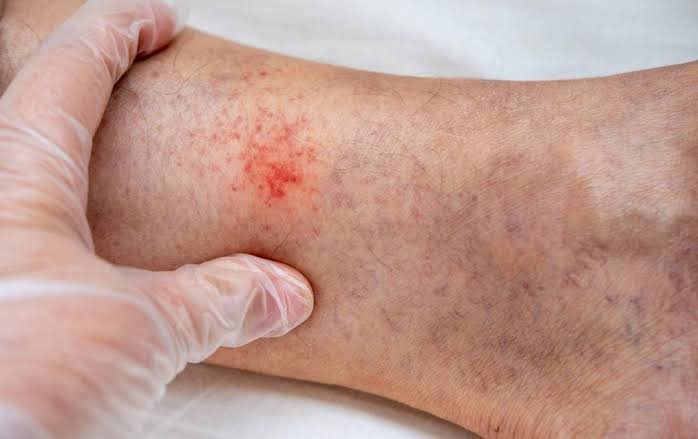
Fall brings cooler air, indoor heating, and a familiar complaint: dry, itchy skin. Most people reach for lotion and move on. However, when the itching, flaking, and discoloration settle mainly around your ankles and lower legs, the cause may run deeper than dry weather. These changes can be a sign of venous stasis dermatitis, a skin condition linked to poor circulation in the leg veins.
Stasis dermatitis is common, especially in adults over 50. It often develops slowly, and people often mistake it for eczema, an allergy, or simple winter dryness. Recognizing it early matters, because the skin changes reflect a vein problem that can worsen without treatment.
What Is Venous Stasis Dermatitis?
Venous stasis dermatitis is inflammation of the skin caused by chronic venous insufficiency. In a healthy leg, small valves inside the veins keep blood flowing up toward the heart. When those valves weaken, blood pools in the lower legs. Over time, pressure inside the veins rises.
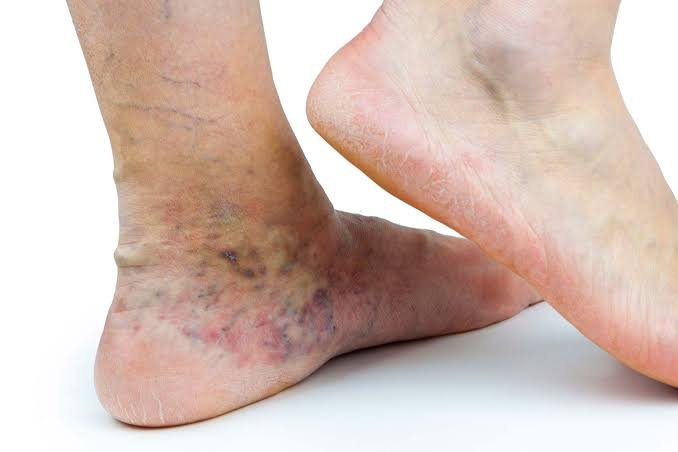
This high pressure forces fluid, proteins, and red blood cells out of the small vessels and into nearby tissue. The skin reacts with inflammation. Iron from broken red blood cells leaves a rusty brown stain behind. The result is skin that looks irritated, discolored, and dry, and that often itches.
Doctors also call this condition gravitational eczema or venous eczema. Whatever the name, the root problem sits in the veins rather than on the skin surface.
Common Signs and Symptoms
Stasis dermatitis usually appears on the lower legs, most often near the inner ankles. It may affect one leg or both. Common signs include:
- Itching, which can be intense
- Dry, scaly, or flaky patches
- Reddish, purple, or brown discoloration
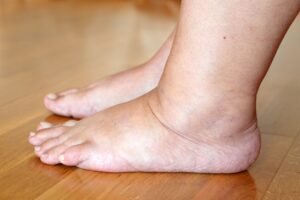
- Swelling around the ankles that worsens by evening
- Skin that feels thick, tight, or shiny
- Small weeping areas or crusts
- A heavy, aching feeling in the legs
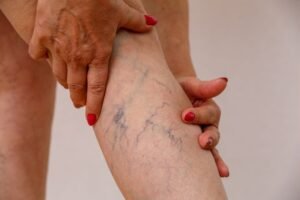
Many people also have visible varicose veins. Still, stasis dermatitis can develop even when large varicose veins are hard to see.
Why Symptoms Often Flare in Fall and Winter
Cooler months create a perfect setup for this condition to flare. Indoor heating dries the air, and dry air pulls moisture from skin that is already fragile. Long, hot showers feel good on cold mornings, but they strip away natural oils. Heat also relaxes vein walls, which can increase swelling in the lower legs.
Many people also move less once the weather turns. Less walking means the calf muscles squeeze the veins less often. As a result, more blood pools in the lower legs and pressure stays high. Heavy socks and boots can rub irritated skin and make itching worse. Taken together, these seasonal habits often explain why lower leg skin feels worse in October than it did in July.
Stasis Dermatitis vs. Ordinary Winter Dry Skin
It can be hard to tell stasis dermatitis from normal dry skin at first. A few differences can help.
Ordinary winter dryness tends to affect many areas at once. Your hands, arms, and shins may all feel tight and rough. It usually improves within a week or two of regular moisturizing. The skin color stays normal, and there is no swelling.
Stasis dermatitis behaves differently. It stays focused on the lower legs, especially around the ankles. Swelling often comes with it, and it tends to worsen by the end of the day. The skin may turn reddish brown or purple, and those color changes do not fade with lotion. Over time, the area may feel firm or thick instead of just rough.
Another clue is how your legs feel. People with stasis dermatitis often describe heaviness, aching, or tiredness in their calves. These symptoms point to a vein problem rather than a simple skin issue. If moisturizing does not help and these signs sound familiar, it is time for a vein evaluation.
Who Is Most at Risk?
Anyone with chronic venous insufficiency can develop stasis dermatitis. Several factors raise the risk:
- Age over 50
- A history of varicose veins
- A past deep vein thrombosis, or DVT
- Pregnancy, especially more than one
- Excess body weight
- Jobs that require standing or sitting for long periods
- Heart failure or kidney disease, which can cause leg swelling
- A family history of vein disease
Why It Should Not Be Ignored
Stasis dermatitis is more than a skin annoyance. It signals that vein pressure has stayed high long enough to damage tissue. Without treatment, the skin can continue to change.
Over time, the lower leg may become hard and tight, a condition called lipodermatosclerosis. In advanced cases, the leg can take on a narrow shape just above the ankle. The skin may also break down and form a venous leg ulcer. These open sores most often appear near the inner ankle and can take months to heal.
Scratching adds risk. Broken skin lets bacteria in and can lead to cellulitis, a skin infection that causes spreading redness, warmth, and pain. Some people also become sensitive to ingredients in creams they use on the irritated area, which can make the rash worse.
How Doctors Diagnose It
A doctor can often recognize stasis dermatitis by looking at the skin and asking about your symptoms. The next step is finding the source. A duplex ultrasound is the key test. This painless scan shows blood flow in the leg veins and reveals which valves leak.
Your doctor may also check for other causes of leg swelling, such as heart, kidney, or thyroid problems. Checking the arteries matters too. Doctors often measure the ankle brachial index before recommending compression, since strong compression can be unsafe when arterial blood flow is poor.
What to Expect at a Vein Evaluation
Many people feel nervous before their first vein visit. Knowing what happens can make it easier.
Your visit usually starts with questions about your symptoms, health history, and medications. The doctor will then look closely at your legs while you stand and while you lie down. Standing helps show swollen or bulging veins that may be hard to see otherwise.
Next comes the ultrasound. A technician spreads a small amount of gel on your leg and moves a handheld probe over the skin. The scan is painless and uses sound waves, not radiation. You may stand for part of the test so the technician can see how blood flows when gravity pulls on it.
Afterward, your doctor will explain the results in plain terms. You will learn which veins are not working well and how that connects to your skin changes. Then you can talk through treatment options and choose a plan that fits your needs and schedule.
Treatment Options That Address the Root Cause
Effective treatment calms the skin and lowers pressure in the veins.
Compression therapy is a core treatment. Medical stockings or wraps support the veins and reduce swelling. Your doctor will recommend the right pressure level for you.
Leg elevation helps drain pooled blood. Raising your legs above heart level for short periods during the day can ease swelling.
Skin care protects the skin barrier. Doctors often recommend a fragrance free moisturizer applied daily. A short course of a prescription steroid cream may also help calm a flare.
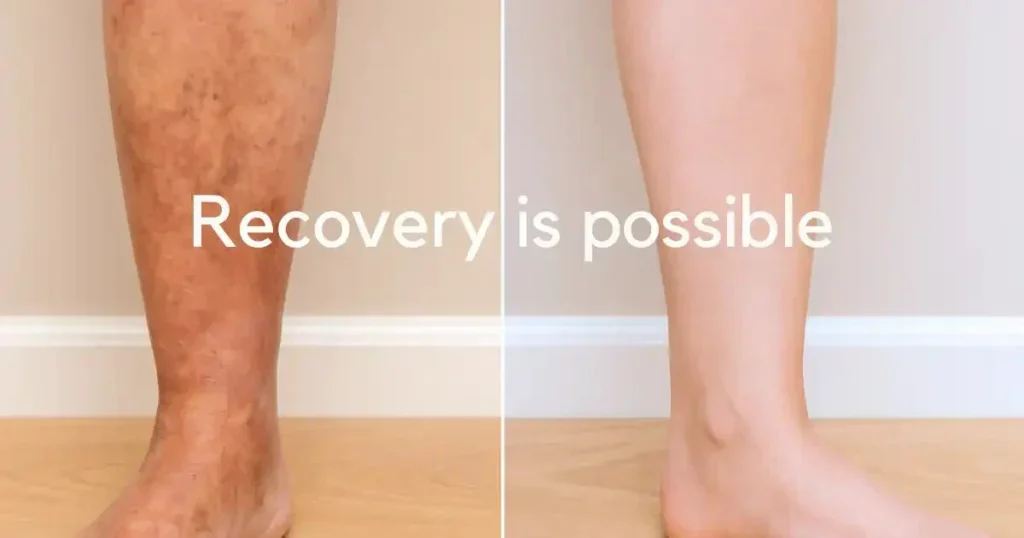
Vein treatment targets the underlying problem. When ultrasound shows reflux, minimally invasive options such as endovenous ablation can close the faulty vein. Blood then reroutes through healthy veins, which often improves skin changes and lowers the risk of ulcers.
Simple Skin Care Tips for the Cooler Months
- Take shorter, lukewarm showers instead of hot ones
- Pat skin dry and apply moisturizer within a few minutes
- Choose gentle, fragrance free soaps and lotions
- Use a humidifier in rooms where you spend a lot of time
- Avoid scratching and keep nails short
- Walk daily to keep the calf muscle pump active
- Elevate your legs when you rest in the evening
When to See a Vascular Specialist
See a doctor if itching and discoloration on your lower legs do not improve with regular moisturizing. Seek prompt care if you notice an open sore, spreading redness, warmth, fever, or sudden swelling in one leg. These signs may point to infection, an ulcer, or a blood clot.
Lower leg skin changes often reveal what is happening inside your veins. Fortunately, a simple ultrasound can confirm the cause and guide treatment that protects your skin all winter and beyond.
Lotion alone cannot fix a vein problem. It can soothe the surface for a while, but the pressure underneath keeps building. Treating the source gives your skin a real chance to heal. If dry, itchy patches keep coming back to the same spot on your lower legs, take that as a signal. Ask a vascular specialist to take a closer look this fall.