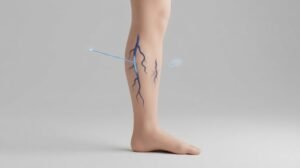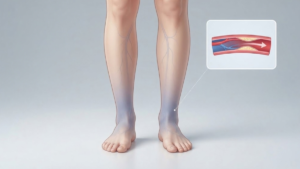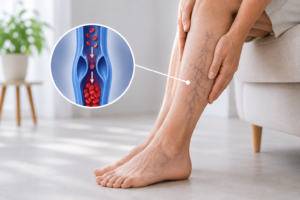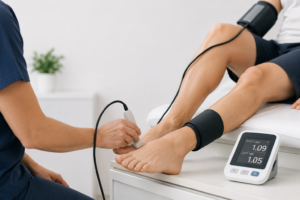
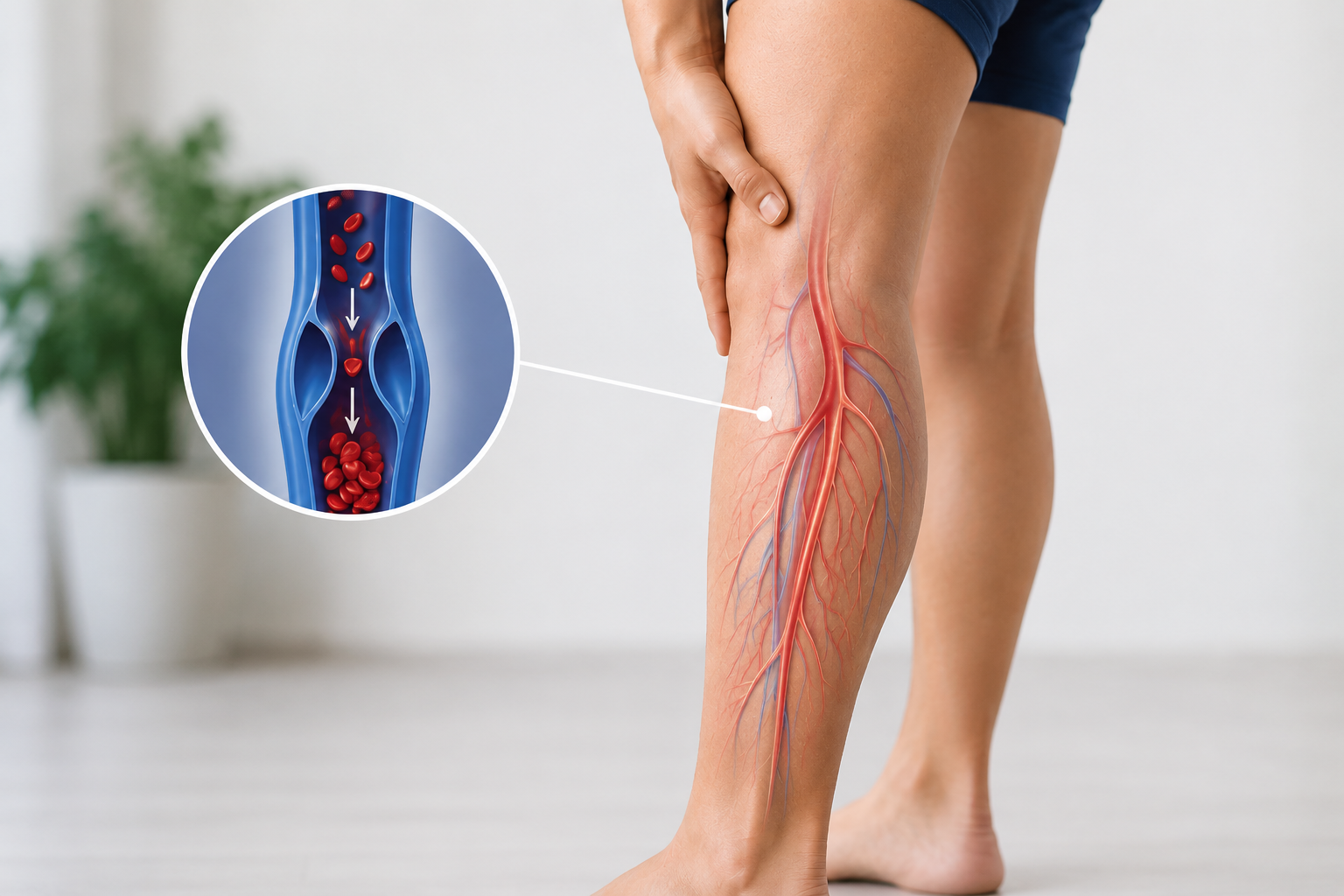
Peripheral artery disease (PAD) narrows the arteries that carry blood to your legs. Fatty plaque builds up inside the artery walls and slowly limits blood flow. Many people first notice calf cramps with walking. Others develop cold feet, sores that heal slowly, or pain at rest.
If lifestyle changes and medicine do not bring enough relief, your doctor may suggest a procedure to restore blood flow. The two main paths are minimally invasive PAD treatment and open bypass surgery. Each option has clear strengths. This guide explains how they work, how recovery differs, and how your vascular team decides which one fits you best.
When PAD Needs a Procedure
Not everyone with PAD needs a procedure. Many people with mild leg pain improve with daily walking, quitting smoking, and medicine. Doctors often prescribe a statin to lower cholesterol. They may add an antiplatelet drug like aspirin or clopidogrel. This drug lowers the risk of heart attack and stroke. A supervised exercise program can help you walk farther with less pain.
A procedure becomes an option if leg pain still limits your daily life despite these steps. For example, some people choose treatment when leg pain keeps them from work or family life. A procedure becomes urgent when PAD reaches a severe stage called chronic limb threatening ischemia (CLTI). Common signs of CLTI include:
- Foot or toe pain that wakes you up at night
- Sores or wounds on the feet that will not heal
- Dark or black skin on the toes, which can signal gangrene
People with CLTI face a real risk of losing part of the leg. For them, restoring blood flow can save the limb.
What Is Minimally Invasive PAD Treatment?
Minimally invasive PAD treatment, also known as endovascular therapy, works from inside the artery. The doctor makes a tiny puncture, usually in the groin. In some cases, the entry point sits in the wrist or the foot. The doctor then guides thin wires and tubes through your blood vessels with the help of live imaging and contrast dye.
Common Endovascular Techniques
Your doctor chooses the right tool based on the size, length, and location of the blockage.
- Balloon angioplasty: A small balloon opens the narrow artery by pressing plaque against the artery wall. Some balloons carry medicine that helps slow new narrowing.
- Stenting: A tiny mesh tube stays inside the artery to hold it open. Some stents release medicine over time.
- Atherectomy: A special device cuts, shaves, or sands away hard plaque from the artery.
Most people get numbing medicine and a mild sedative. They stay awake and relaxed. Many go home the same day or after one night in the hospital.
What Is Open Bypass Surgery?
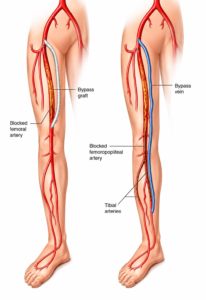
Open bypass surgery creates a new path for blood to flow around a blocked artery. The surgeon makes an incision in the leg and connects a graft above and below the blockage. Blood flows through the graft to the lower leg and foot.
Types of Bypass Grafts
The best graft often comes from your own body. Surgeons usually prefer the great saphenous vein, a long vein that runs along the inner leg. A healthy vein graft tends to last longer than a synthetic one, especially for a bypass that reaches below the knee.
If you do not have a suitable vein, your surgeon may use a synthetic tube instead. Synthetic grafts work well for some bypasses above the knee.
Most patients sleep through the surgery. They stay in the hospital for several days after the operation.
Comparing Recovery, Risks, and Results
Recovery Time
Recovery time is one of the biggest differences between the two paths. After minimally invasive PAD treatment, most people return to light activity within a few days. The small puncture site heals quickly, and pain stays mild.
In contrast, healing from open bypass surgery takes longer. Patients often spend about four to seven days in the hospital. Full recovery at home may take four to eight weeks. In addition, you may need help with daily tasks for the first week or two. The leg incision needs careful care to prevent infection. Leg swelling is common for several weeks.
Risks and Complications
Every procedure has some risk. A catheter procedure can cause bleeding or bruising at the puncture site. Less often, the artery can tear or a blood clot can form. Contrast dye can strain the kidneys in people with kidney disease.
Open surgery has the same risks as any big operation. These include wound infection, heart strain, breathing problems, and blood clots. Serious heart or lung disease raises the risk of surgery.
How Long the Results Last
Bypass results often last longer. A good vein bypass can keep blood flowing for many years. By contrast, an artery treated from the inside may narrow again over time. Some patients need a repeat procedure to keep the artery open. Even so, a repeat catheter procedure is often much easier than a second open surgery.
What Research Shows
Two large clinical trials have shaped how vascular specialists compare these options for CLTI.
The BEST CLI trial appeared in the New England Journal of Medicine in 2022. It studied adults with CLTI in the legs. Some patients had a good quality saphenous vein. In this group, bypass surgery led to fewer major leg events or deaths compared with endovascular therapy. For patients without a good vein, the two approaches showed similar results.
The BASIL 2 trial appeared in The Lancet in 2023. It focused on blockages below the knee. In that group, patients who had endovascular treatment first were more likely to be alive without a major amputation. Fewer deaths in the endovascular group drove most of this difference.
Together, these findings show that no single approach fits everyone. The location of the blockage and the quality of your veins both matter a great deal.
How Your Vascular Team Chooses the Right Option
Your vascular specialist will first review imaging, such as a duplex ultrasound, CT angiography, or a catheter angiogram. These tests show where each blockage sits and how far it runs. The team weighs several factors:
- Blockage pattern: Short blockages often respond well to a balloon or stent. Long or complex blockages may do better with bypass.
- Vein quality: A healthy saphenous vein makes bypass a stronger choice.
- General health: Heart, lung, and kidney problems can make open surgery riskier.
- Wound size: Large foot wounds may need the strongest and most lasting blood flow possible.
- Your goals: Your activity level, outlook, and personal wishes all count.
Some patients benefit from a hybrid procedure. It pairs open surgery on one artery with a catheter treatment on another at the same time.
Life After PAD Treatment
A procedure restores blood flow, but it does not cure PAD. The disease can keep progressing in other arteries. For that reason, your ongoing care plan matters as much as the procedure itself.
- Take your statin and antiplatelet medicine every day.
- Stop smoking and avoid all tobacco products.
- Keep your blood sugar and blood pressure in a healthy range.
- Walk often to help blood flow.
- Check your feet daily for cuts, color changes, or sores.
- Keep every scheduled checkup and ultrasound scan. Many teams check the treated artery soon after the procedure and then at regular visits.
Call your doctor right away if leg pain returns, your foot turns cold or pale, or a wound stops healing. These signs may mean the treated artery has narrowed again.
Frequently Asked Questions
Is minimally invasive PAD treatment safer than bypass surgery?
For many patients, endovascular therapy carries less risk in the first weeks and allows a faster recovery. However, bypass may offer longer lasting results for some people. Your safety depends on your general health and the type of blockage you have.
Can I have bypass surgery after an endovascular procedure?
Yes, in most cases. Endovascular therapy does not usually rule out a future bypass. Your surgeon will check your arteries again before planning any future treatment.
Will I be awake during the procedure?
Most people stay awake during endovascular treatment and receive light sedation. Bypass surgery usually needs general anesthesia, so you will sleep. Some get a spinal or nerve block instead, which numbs the lower body.
How soon can I walk after treatment?
Most people walk the same day or the next day after endovascular therapy. After bypass surgery, your care team usually helps you walk within a day or two. Your doctor will tell you how fast to increase your activity.
Does insurance pay for these procedures?
Medicare and most private plans pay for both procedures when they are medically necessary. Check with your plan about your share of the costs and any approval rules.
The Bottom Line
Both minimally invasive PAD treatment and open bypass surgery can restore blood flow and protect your legs. Endovascular therapy offers a quicker recovery with less pain. Open bypass surgery often gives more lasting results, especially when a healthy vein is available. The right choice depends on your arteries, your health, and your goals. Speak with a vascular specialist who offers both options so you can make a confident, informed decision.
This article is for general education only. It does not replace advice from your own doctor or vascular specialist.
Sources
- Gornik HL, Aronow HD, Goodney PP, et al. 2024 ACC/AHA Guideline for the Management of Lower Extremity Peripheral Artery Disease. Circulation. 2024.
- Farber A, Menard MT, Conte MS, et al. Surgery or Endovascular Therapy for Chronic Limb Threatening Ischemia (BEST CLI). New England Journal of Medicine. 2022.
- Bradbury AW, Moakes CA, Popplewell M, et al. Vein Bypass First Versus Best Endovascular Treatment First Revascularisation Strategy (BASIL 2). The Lancet. 2023.
- Conte MS, Bradbury AW, Kolh P, et al. Global Vascular Guidelines on the Management of Chronic Limb Threatening Ischemia. Journal of Vascular Surgery. 2019.