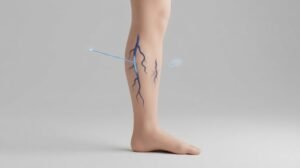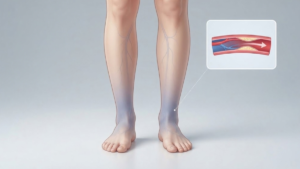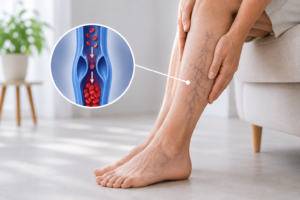
A leg angiogram gives your doctor a clear map of the arteries in your legs. It shows exactly where blood flow slows or stops. Doctors often order this test for people with peripheral artery disease (PAD), leg pain with walking, or foot wounds that heal poorly.
Feeling nervous about the test is normal. Knowing what happens at each step can ease that worry. This guide walks you through how to prepare, what happens in the procedure room, and how to care for yourself at home afterward.
What Is a Leg Angiogram?
A leg angiogram is an imaging test that uses contrast dye and live imaging to show your leg arteries. The doctor places a thin, flexible tube called a catheter into an artery. Next, the doctor injects dye through the tube. The dye makes the arteries show up clearly on a screen.
Doctors also call this test a lower extremity angiogram or a peripheral angiogram. It remains the most detailed way to view blood flow in the legs.
Why Your Doctor May Recommend One
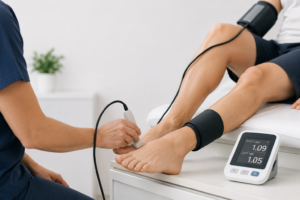
Your doctor may suggest a leg angiogram if other tests point to a blockage. These earlier tests often include an ankle brachial index (ABI) or a duplex ultrasound. A leg angiogram can help your doctor:
- Find the exact location and length of a blockage
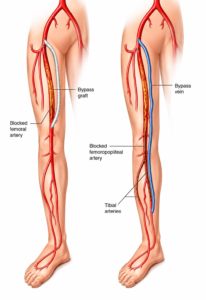
- Plan treatment such as angioplasty, stenting, or bypass surgery
- Check blood flow to a foot wound that will not heal
- Look for an aneurysm or other artery problem
A big advantage is that your doctor can often treat a blockage during the same visit. This can save you from a second procedure.
How to Prepare for Your Leg Angiogram
Good preparation helps the test go smoothly and safely. Your care team will give you specific instructions. Always follow their advice first.
Tests and Health Review
Your doctor will likely order blood tests before the procedure. These tests check your kidney function and blood clotting. Some centers check your heart rhythm with an ECG as well. Contrast dye passes through the kidneys, so healthy kidney function matters.
Tell your care team if you have any of the following:
- A past reaction to contrast dye or iodine
- Kidney disease
- Diabetes
- Any chance of pregnancy
- A bleeding problem
If you had a reaction to contrast dye before, your doctor may give you medicine ahead of time to lower the risk.
Medicines and Fasting
Bring a full list of your medicines, including vitamins and supplements. Your doctor may ask you to pause some of them. Blood thinners need special attention, and you should never stop one on your own. Your doctor will tell you which ones to hold and for how long.
People with diabetes may need to adjust insulin or other diabetes medicine on the day of the test. Some patients who take metformin may need to pause it for a short time after the dye. Ask your doctor what applies to you.
Most centers ask you to stop eating for several hours before the test. Many allow clear liquids until a set time. Also, plan for a friend or family member to drive you home.
What Happens During the Procedure
Most leg angiograms take place in a special procedure room called a catheterization lab. The test itself usually takes about one to two hours. It may take longer if your doctor treats a blockage at the same time.
Getting Ready in the Lab
A nurse places an IV line in your arm for fluids and medicine. You will lie on your back on a narrow table. Staff will attach monitors to track your heart rate, blood pressure, and oxygen level.
Most patients receive light sedation. You will feel relaxed and drowsy but can still follow simple requests. Your doctor then cleans and numbs the skin over the access site. The groin is the most common site. In some cases, the doctor uses an artery in the wrist or foot.
Inside the Artery
The doctor inserts a thin needle into the artery, followed by a small tube called a sheath. You may feel some pressure, but you should not feel sharp pain. The doctor then guides the catheter through your arteries toward your legs.
Next, the doctor injects the contrast dye. Many people feel a warm, flushing feeling in the legs or pelvis for a few seconds. This feeling is normal and fades quickly. The imaging camera will move around you as it takes pictures. Your team may ask you to stay very still or hold your breath for a few seconds.
If Your Doctor Finds a Blockage
The images may show a narrow or blocked artery. In that case, the team may treat it right away with angioplasty, a stent, or atherectomy. Your doctor will discuss this possibility with you before the procedure begins. That way, you can agree to treatment in advance.
Recovery Right After the Test
Once the test ends, the doctor removes the sheath. A nurse or doctor will press on the site for several minutes to stop bleeding. Some doctors use a closure device, such as a small plug or stitch, to seal the artery.
You will need to rest in a recovery area. If the doctor used your groin, you may need to lie flat for two to six hours. This time can be shorter if the team used a closure device or the wrist. Nurses will check your pulse, blood pressure, and the access site often.
Drink plenty of fluids after the test, unless your doctor limits your fluid intake. Fluids help your kidneys flush out the dye. Many patients go home the same day. If you had a treatment, you may stay overnight.
Caring for Yourself at Home
Most people feel back to normal within a day or two. Still, the artery needs time to heal. Follow these general tips unless your doctor tells you otherwise:
- Avoid heavy lifting and hard exercise for about one week.
- Keep the access site clean and dry for the first day or two.
- Avoid baths, hot tubs, and swimming until the site heals.
- Take medicines exactly as your doctor prescribes.
- Expect a small bruise or a pea sized lump at the site.
Your doctor will review the images and share the results. You may learn some results before you leave. A full report may take a few days.
Warning Signs to Watch For
Call your doctor or seek emergency care if you notice any of these signs:
- Bleeding that does not stop after 10 minutes of firm pressure
- Swelling at the site that grows quickly
- Your leg or foot turns cold, pale, blue, or numb
- New severe pain in the leg
- Fever, redness, or pus at the site
- Shortness of breath, hives, or other signs of an allergic reaction
If bleeding is heavy, lie down, press firmly on the site, and call 911.
Risks of a Leg Angiogram
A leg angiogram is generally safe, and serious problems are rare. Like any procedure, it does carry some risks. The most common issue is bruising or bleeding at the access site.
Less common risks include:
- A blood collection under the skin, known as a hematoma
- Damage to the artery or a bulge in the artery wall
- An allergic reaction to the contrast dye
- Kidney strain from the dye, mainly in people with kidney disease or diabetes
- Blood clots
- Infection at the access site
Your care team watches closely for these problems and knows how to treat them.
The test uses a small dose of radiation. Your team keeps this dose as low as possible. Your doctor will suggest this test only when the benefits outweigh the risks for you. Ask questions if anything feels unclear.
Other Imaging Options
Some patients can have a noninvasive scan first. A CT angiogram uses dye and a CT scanner to image the arteries. An MR angiogram uses a magnet and a different type of dye. These scans do not require a catheter. However, they cannot treat a blockage. A catheter based leg angiogram remains the standard when your doctor may need to treat a blockage right away.
Frequently Asked Questions
Is a leg angiogram painful?
Most people feel only a quick sting from the numbing shot and some pressure. The warm feeling from the dye passes in seconds.
How long does a leg angiogram take?
The test usually takes about one to two hours. Plan to spend most of the day at the hospital or center, including preparation and recovery time.
Can I drive after a leg angiogram?
No. The sedation can affect your judgment and reflexes. Ask a trusted adult to drive you home.
The Bottom Line
A leg angiogram is one of the best tools for finding and treating blocked leg arteries. The test is usually quick, and most people recover fast. Careful preparation and good aftercare lower your risk of problems. If you have questions about your upcoming leg angiogram, talk with your vascular specialist before the day of your test.
This article is for general education only. It does not replace advice from your own doctor or vascular specialist.
Sources
- Gornik HL, Aronow HD, Goodney PP, et al. 2024 ACC/AHA Guideline for the Management of Lower Extremity Peripheral Artery Disease. Circulation. 2024.
- American College of Radiology. ACR Manual on Contrast Media. 2024 edition.
- RadiologyInfo.org (American College of Radiology and Radiological Society of North America). Angiography.
- National Heart, Lung, and Blood Institute. Peripheral Artery Disease: Diagnosis.