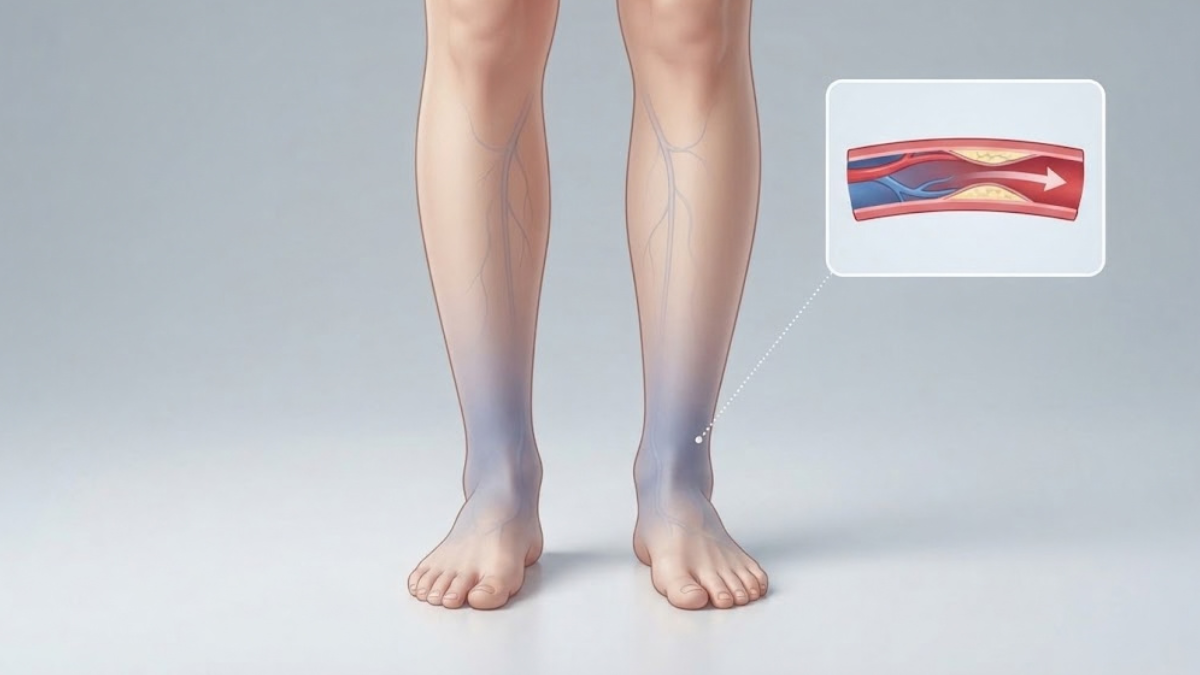
Seeing your feet turning blue can feel alarming. In some cases, the cause is harmless, like cold weather. In others, blue feet point to a problem with blood flow that needs prompt care.
Your skin gets its healthy pink color from blood rich in oxygen. Skin can take on a blue or purple tint when it does not get enough oxygen. Doctors call this color change cyanosis. This guide explains the common causes of feet turning blue, the warning signs of an emergency, and how doctors find and treat the problem.
What Blue Feet Mean
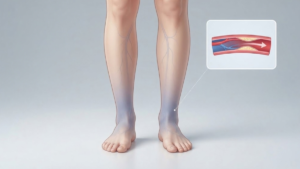
Blue feet usually signal one of three issues. Blood may not reach the feet well, blood may pool in the feet, or the blood may lack oxygen.
Doctors divide cyanosis into two main types:
- Peripheral cyanosis: Only the hands, feet, fingers, or toes turn blue. Poor circulation or cold exposure often causes this type.
- Central cyanosis: The lips, tongue, and body also look blue. A heart or lung problem usually causes this type, and it needs urgent care.
The pattern of color change gives your doctor useful clues. For example, one blue foot often points to a local blood flow problem. Blue color in both feet along with the lips suggests a problem in the heart or lungs.
Common Causes of Feet Turning Blue
Cold Exposure
Cold air or cold water makes small blood vessels in the skin tighten. This reflex protects your core body heat. As a result, your feet may look blue or purple for a short time. Wet socks and tight shoes can make this effect worse. The color should return to normal within minutes after you warm up.
Raynaud’s Phenomenon
Raynaud’s phenomenon causes sudden spasms in small arteries, often in the fingers and toes. Cold or stress usually triggers an attack. The skin may turn white, then blue, and then red as blood flow returns. Attacks can cause numbness, tingling, or throbbing.
Raynaud’s often occurs on its own. In some people, it happens alongside an autoimmune disease such as lupus or scleroderma. See a doctor if attacks are severe, painful, or cause sores.
Peripheral Artery Disease
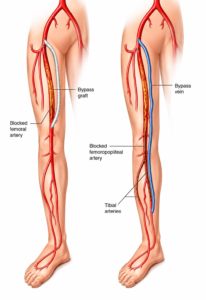
Peripheral artery disease (PAD) happens when plaque narrows the arteries in the legs. Less blood reaches the feet. Along with color changes, PAD may cause:
- Leg cramps or pain when walking that ease with rest
- Cold feet, especially on one side
- Shiny skin and hair loss on the legs
- Weak or absent pulses in the feet
- Toe or foot sores that heal slowly
Many people with PAD have no leg pain at all. Your risk rises if you smoke or have diabetes, high blood pressure, or high cholesterol. Age over 65 also raises your risk.
Blue Toe Syndrome
Tiny bits of plaque or cholesterol can break loose from a larger artery. These bits travel downstream and block small arteries in the toes. One or more toes may suddenly turn blue or purple and become painful. The foot pulses may still feel normal. Blue toe syndrome needs prompt medical attention because it can signal a serious artery problem upstream.
Vein Problems
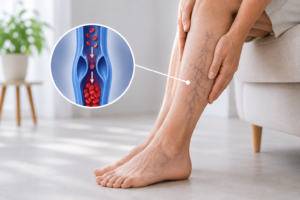
Your veins carry blood back to the heart. Chronic venous insufficiency happens when valves inside the leg veins weaken. Blood then pools in the lower legs. Over time, this can cause swelling, aching, and a bluish or brownish skin color near the ankles.
A deep vein thrombosis (DVT) is a blood clot in a deep vein. It can cause swelling, pain, warmth, and a red or blue color in one leg. A DVT can travel to the lungs, so it needs urgent care.
Heart and Lung Conditions
Some causes of blue skin start in the chest, not the legs. Heart failure can weaken blood flow to the feet. Lung diseases, such as COPD or severe pneumonia, can lower the oxygen in your blood. Certain heart defects can also let blood low in oxygen reach the rest of the body. In these cases, the lips and fingers often look blue as well. Shortness of breath, tiredness, or chest pain may come with the color change.
Other Causes
Other conditions can also lead to blue feet. These include frostbite, rare blood disorders, and certain medicines that narrow blood vessels. A harmless condition called acrocyanosis causes lasting, painless blue color in the hands and feet of some people.
When Blue Feet Are an Emergency
Some causes of feet turning blue need care within hours. A sudden blockage in a leg artery, known as acute limb ischemia, can threaten the limb. Doctors often use the six Ps to describe its signs:
- Pain: Sudden, severe pain in the leg or foot
- Pallor: Pale, blue, or mottled skin
- Pulselessness: No pulse in the foot
- Paresthesia: Numbness or a pins and needles feeling
- Paralysis: Weakness or trouble moving the foot
- Poikilothermia: A foot that feels cold to the touch
Call 911 or go to the nearest emergency room if your foot suddenly turns blue with any of these signs. You should also get emergency help if blue skin comes with chest pain, trouble breathing, confusion, or blue lips. Early treatment can save the leg and, in some cases, your life.
How Doctors Find the Cause
Your doctor will start with questions about your symptoms and health history. Next, they will examine your legs and feet, check your pulses, and look at your skin. Depending on what they find, your doctor may order one or more tests:
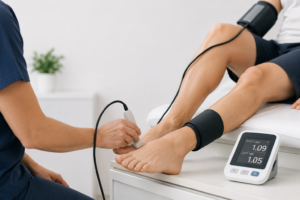
- Ankle brachial index (ABI): This quick test compares blood pressure in your ankle and arm to check for PAD.
- Duplex ultrasound: This scan shows blood flow in the arteries and veins. It can find clots as well.
- Pulse oximetry: A small clip on your finger measures the oxygen level in your blood.
- Blood tests: These can check for diabetes, clotting problems, or autoimmune disease.
- Angiography: CT, MR, or catheter imaging creates a detailed map of your arteries.
Questions Your Doctor May Ask
Your answers help your doctor narrow down the cause. Be ready to share:
- When the color change started and how fast it appeared
- Whether one foot or both feet change color
- What makes the color better or worse, such as cold or rest
- Any pain, numbness, swelling, or sores
- Your smoking history and current medicines
- Any past heart, lung, or blood clot problems
Photos of your feet during an episode can help too, since the color may fade before your visit.
Treatment Options
Treatment depends on the cause. Your doctor will build a plan around your specific diagnosis.
Treating Circulation Problems
For PAD, treatment often starts with daily walking, quitting smoking, and medicine. Doctors commonly prescribe statins and antiplatelet drugs to lower the risk of heart attack and stroke. People with severe blockages may need a procedure. Options include angioplasty, stenting, atherectomy, or bypass surgery.
Acute limb ischemia needs emergency treatment. Doctors may use clot dissolving medicine, a catheter procedure to remove the clot, or open surgery.
Treating Other Causes
People with Raynaud’s often benefit from keeping warm and avoiding triggers. Some need medicine that relaxes blood vessels. Vein problems may improve with compression stockings, leg elevation, or vein procedures. A DVT usually requires blood thinning medicine.
Simple Steps to Protect Your Feet
You can take several steps at home to support healthy circulation:
- Keep your feet warm with socks and proper shoes.
- Stop smoking, since nicotine narrows blood vessels.
- Stay active with regular walking.
- Manage blood sugar, blood pressure, and cholesterol.
- Check your feet daily for color changes, cuts, or sores.
- Avoid tight socks or shoes that squeeze your feet.
These habits help, but they do not replace a medical exam. See a doctor if your feet keep turning blue.
Frequently Asked Questions
Should I worry if my feet turn blue only when cold?
Brief color change in the cold is often normal. See a doctor if the color lasts after you warm up, or if you notice pain, numbness, or sores.
Can diabetes cause feet turning blue?
Diabetes raises the risk of PAD and nerve damage. Both can affect the feet. People with diabetes should report any color change to their doctor within a day or two.
Are blue feet a sign of poor circulation?
Often, yes. Blue or purple feet can mean that blood moves too slowly through the feet or carries too little oxygen. A vascular exam can confirm the cause.
Can sitting too long make my feet blue?
Long periods of sitting can cause blood to pool in the legs. If your feet also swell or hurt, see a doctor to rule out a vein problem or clot.
The Bottom Line
Feet turning blue can have simple causes, like cold weather. Still, blue feet can also warn of PAD, a blood clot, or a heart or lung problem. Pay attention to how fast the color appears and what other symptoms come with it. Sudden changes need emergency care. For ongoing color changes, a vascular specialist can find the cause and help protect your feet.
This article is for general education only. It does not replace advice from your own doctor or vascular specialist.
Sources
- Gornik HL, Aronow HD, Goodney PP, et al. 2024 ACC/AHA Guideline for the Management of Lower Extremity Peripheral Artery Disease. Circulation. 2024.
- National Heart, Lung, and Blood Institute. Raynaud’s Phenomenon.
- National Heart, Lung, and Blood Institute. Venous Thromboembolism.
- Björck M, Earnshaw JJ, Acosta S, et al. European Society for Vascular Surgery 2020 Clinical Practice Guidelines on the Management of Acute Limb Ischaemia. European Journal of Vascular and Endovascular Surgery. 2020.