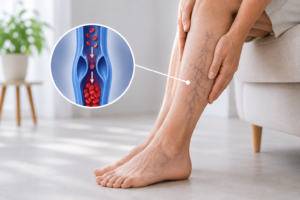
Peripheral artery disease (PAD) is common in older adults. It narrows the arteries in the legs. It can cause leg pain, slow healing wounds, and even limb loss. Many New Jersey residents with PAD count on Medicare to pay for their care. So one question comes up early: does Medicare cover PAD treatment in New Jersey?
In most cases, the answer is yes. Medicare pays for PAD tests, procedures, and many drugs if your doctor shows a clear medical need. What you pay depends on the type of plan you have. This guide explains what Medicare pays for, what you may owe, and where to find extra help in New Jersey.
How Medicare Works in New Jersey
Medicare is a national program. Its basic rules are the same in every state, including New Jersey. The main local differences are the private plans you can choose, some state aid programs, and certain pilot programs.
You can get your benefits in one of two main ways:
- Original Medicare: Part A pays for hospital care. Part B pays for doctor visits and outpatient care. You can see any provider in the country who accepts Medicare.
- Medicare Advantage (Part C): Private insurance companies run these plans under federal rules. Each plan must cover everything Original Medicare covers. However, most plans use provider networks and may require prior approval for some care.
Most people need Part D for prescription drugs too. Many Medicare Advantage plans include drug coverage.
PAD Tests That Medicare Covers
Medicare Part B pays for tests that help diagnose PAD if you have symptoms or signs of the disease. Your doctor must record a medical reason for each test. Your doctor may also check your pulses and look at your feet during the visit. Common covered tests include:
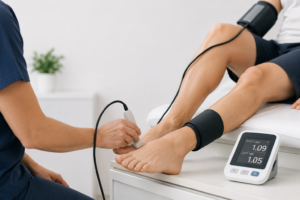
- Ankle brachial index (ABI): This test compares the blood pressure in your ankle and arm.
- Duplex ultrasound: Sound waves show blood flow and blockages in your leg arteries.
- CT or MR angiography: These scans make detailed pictures of your arteries.
- Catheter angiogram: Your doctor uses dye and live imaging to map blockages.
Keep in mind that Medicare does not list PAD screening as a separate preventive benefit for people with no symptoms. So, tell your doctor about any leg pain, numbness, or foot sores. These details help your doctor order the right tests.
PAD Treatments That Medicare Covers
Medicare pays for a wide range of PAD care that meets its medical need rules.
Supervised Exercise Therapy
A walking program is a first step for many people with leg pain from PAD. Medicare Part B covers supervised exercise therapy for people with PAD symptoms. You can get up to 36 sessions over 12 weeks. Before you start, you need a referral from your doctor. Your doctor may be able to request more sessions if you need them.
Minimally Invasive Procedures
Part B usually pays for catheter procedures that you have as an outpatient. These include balloon angioplasty, stents, and atherectomy. You may have them in a hospital outpatient unit, a surgery center, or an office based vascular lab.
Open Surgery and Hospital Stays
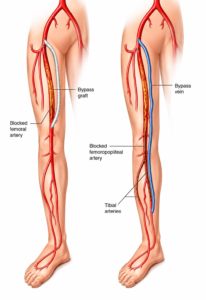
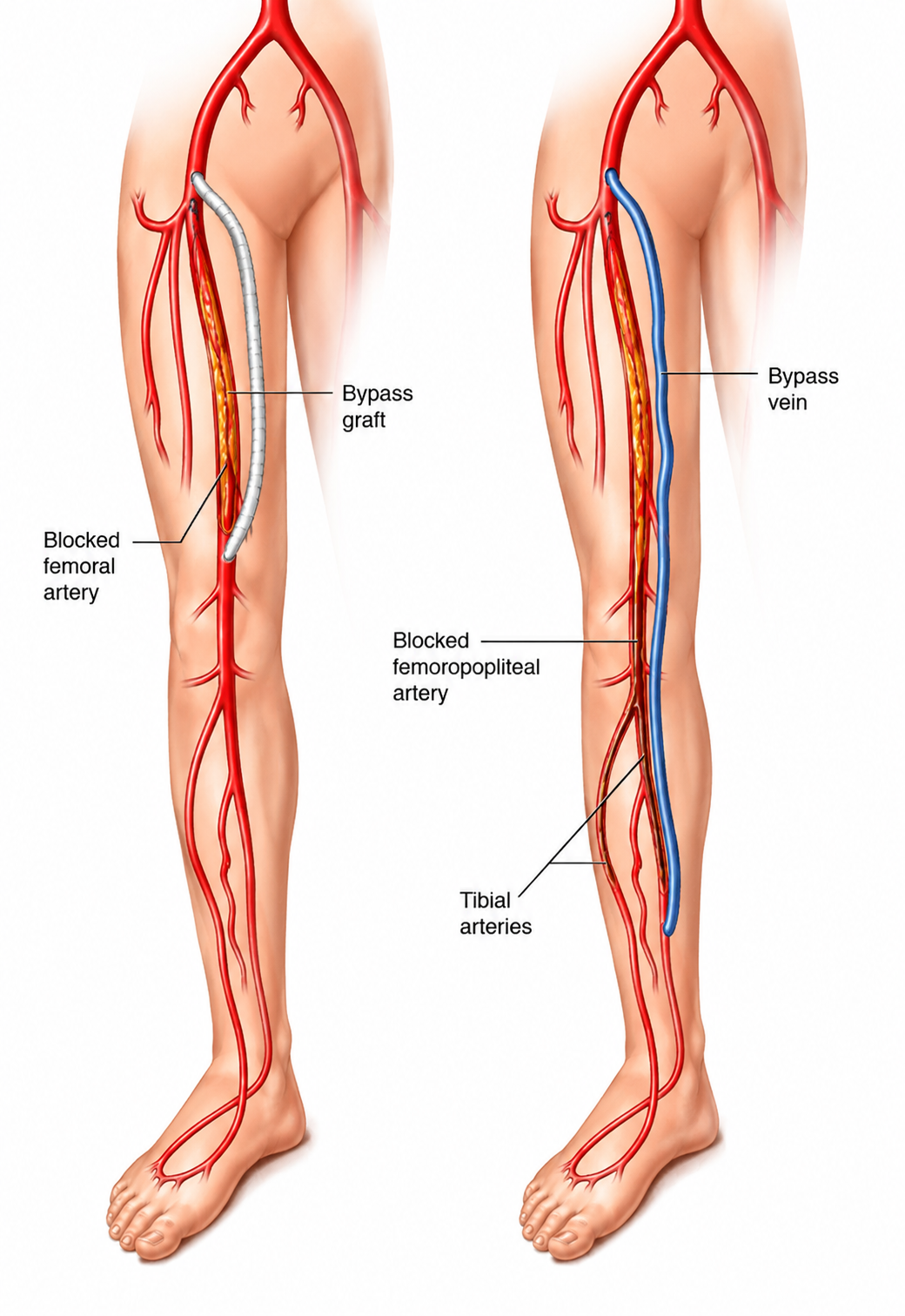
Part A pays for inpatient hospital care. This applies if you need bypass surgery or a hospital stay for a serious PAD problem. Part B pays your surgeon’s fees for that stay.
Medicines, Wound Care, and Foot Care
Part D plans pay for many common PAD drugs. Examples include statins, antiplatelet drugs, and some blood thinners. Check your plan’s drug list for your exact medicines.
Part B may also cover wound care for foot ulcers. It covers foot exams every six months for some people with diabetes and nerve damage in the feet. Medicare may pay for routine foot care, such as nail care, if a health problem like severe PAD puts your feet at risk.
Care After Treatment
After a procedure, Part B usually pays for the checkups and ultrasound scans your doctor orders. These visits help your team catch new narrowing early. PAD is a lifelong condition, so most patients need regular checkups for years.
What You May Pay in 2026
Your share of the cost depends on your plan. Here are the key 2026 numbers for Original Medicare from the Centers for Medicare and Medicaid Services (CMS):
- The standard Part B premium is $202.90 per month.
- The Part B deductible is $283 for the year.
- After you meet the deductible, you usually pay 20% of the Medicare approved amount for most outpatient care.
- The Part A hospital deductible is $1,736 for each benefit period.
Original Medicare has no yearly cap on what you pay. For this reason, many people buy a Medicare Supplement (Medigap) plan to help with the 20% share. Medicare Advantage plans work in a different way. Instead, they set their own copays. Each plan must have a yearly limit on your costs for covered care.
Prior Authorization Rules in New Jersey
In the past, Original Medicare rarely asked for prior approval. That changed in 2026 for some services in New Jersey. CMS started the Wasteful and Inappropriate Service Reduction (WISeR) Model in six states, including New Jersey.
This model adds a prior approval step for a short list of services in Original Medicare. The list includes skin substitutes for wound care, nerve stimulator implants, and certain spine injections. CMS states that the model does not change what Medicare covers. It aims to make standard decisions within a few business days.
If you have PAD with a foot wound, ask your wound care team whether any part of your care falls under this model. In most cases, your provider handles the request for you.
Medicare Advantage plans in New Jersey often require prior approval for procedures like angioplasty or stenting. Your doctor’s office usually sends the request. Ask about its status before your procedure date.
Help With Costs for New Jersey Residents
New Jersey offers several programs that can lower your health care costs. Most of them look at your income and assets.
- Medicare Savings Programs: These can help pay your Part B premium. Some levels help with deductibles and coinsurance too.
- PAAD and Senior Gold: These state programs help older adults and people with disabilities pay for prescriptions.
- NJ FamilyCare: This is the state Medicaid program. People who have both Medicare and Medicaid often pay very little for care.
- Extra Help: This federal program lowers Part D drug costs for people with limited income.
New Jersey runs the State Health Insurance Assistance Program (SHIP) as well. Trained counselors give free, fair help with Medicare choices, claims, and appeals. For example, a counselor can compare plans that include your vascular doctors.
Tips to Avoid Surprise Bills
A little planning can protect you from surprise costs. Take these steps before any PAD procedure:
- Confirm that your doctor and facility accept Medicare or are in your plan’s network.
- Ask whether you will be an inpatient or an outpatient.
- Request a cost estimate from the billing office.
- Check whether your plan needs prior approval.
- Read any Advance Beneficiary Notice with care before you sign it.
If Medicare denies a claim, you have the right to appeal. Your Medicare Summary Notice explains how to start. In addition, keep copies of every bill and letter you receive. A SHIP counselor can guide you through each step.
Frequently Asked Questions
Does Medicare cover PAD treatment in New Jersey at an office based lab?
Yes. Part B can pay for procedures in an office based vascular lab if they meet Medicare rules. Your costs may differ from a hospital, so ask for an estimate.
Will Medicare pay for a second opinion?
Medicare Part B covers a second opinion before surgery that is not an emergency. If the first two opinions differ, it may pay for a third.
Can I switch plans if my PAD care needs change?
You can change plans during Medicare Open Enrollment each fall, from October 15 to December 7. People in Medicare Advantage can make one plan change from January 1 to March 31. Keep in mind that Medigap insurers in many states can review your health before they sell you a policy outside certain protected periods. A SHIP counselor can explain how these rules apply in New Jersey.
Does Medicare cover compression stockings or special shoes?
Medicare covers special shoes for some people with diabetes who meet certain rules. It pays for compression garments only in limited cases, such as lymphedema or care for some leg ulcers.
The Bottom Line
Medicare covers most PAD tests and treatments in New Jersey if your doctor records a medical need. Your costs depend on whether you have Original Medicare, a Medigap plan, or a Medicare Advantage plan. State programs and free SHIP counseling can help you along the way. Before treatment, confirm coverage with your plan and your vascular care team. For the latest rules, visit Medicare.gov or call Medicare.
This article is for general education only. It is not legal, insurance, or financial advice. Coverage rules and costs can change, so confirm details with Medicare or your plan.
Sources
- Centers for Medicare and Medicaid Services. 2026 Medicare Parts A and B Premiums and Deductibles. Fact sheet, November 2025.
- Centers for Medicare and Medicaid Services. National Coverage Determination for Supervised Exercise Therapy for Symptomatic Peripheral Artery Disease (NCD 20.35).
- Centers for Medicare and Medicaid Services Innovation Center. Wasteful and Inappropriate Service Reduction (WISeR) Model.
- Medicare.gov. Your Medicare Coverage: Second Surgical Opinions; Therapeutic Shoes or Inserts.
- New Jersey Department of Human Services, Division of Aging Services. State Health Insurance Assistance Program; PAAD and Senior Gold.