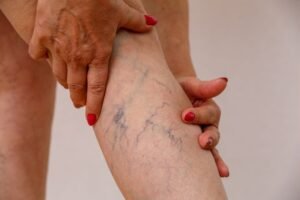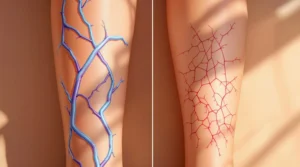
Many people with varicose veins worry about blood clots. It is a fair question. Varicose veins are swollen, twisted veins where blood moves slowly, and slow blood flow is one of the main conditions that allow clots to form. So, can varicose veins cause blood clots?
The short answer is yes, they can. However, not all clots are the same. Some form in veins just under the skin and are usually less dangerous. Others form deep inside the leg and can become life threatening. Understanding the difference between superficial thrombophlebitis and deep vein thrombosis helps you know when to watch and when to act fast.
Why Varicose Veins Raise the Risk of Clots
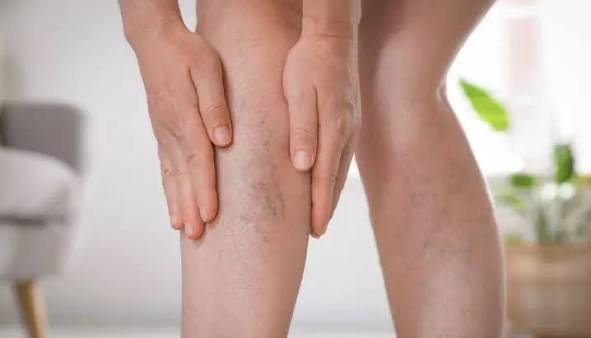
Healthy leg veins have small valves that keep blood moving up toward the heart. In varicose veins, these valves no longer close well. As a result, blood flows backward and pools in the lower leg.
Pooled blood moves slowly. When blood sits still, clotting factors have more time to come together. Stretched vein walls can also become irritated or inflamed, which adds to the risk. Together, slow flow and vein wall changes create an environment where clots form more easily.
Large studies have linked varicose veins to a higher risk of deep vein thrombosis. These studies show a strong association, although they do not prove that varicose veins directly cause every clot. Other shared risk factors, such as age, weight, and inactivity, may also play a role.
What Is Superficial Thrombophlebitis?
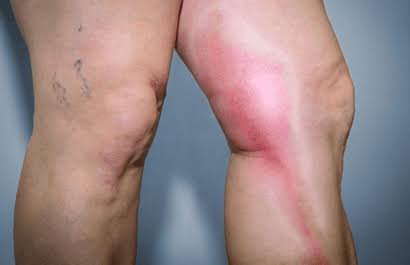
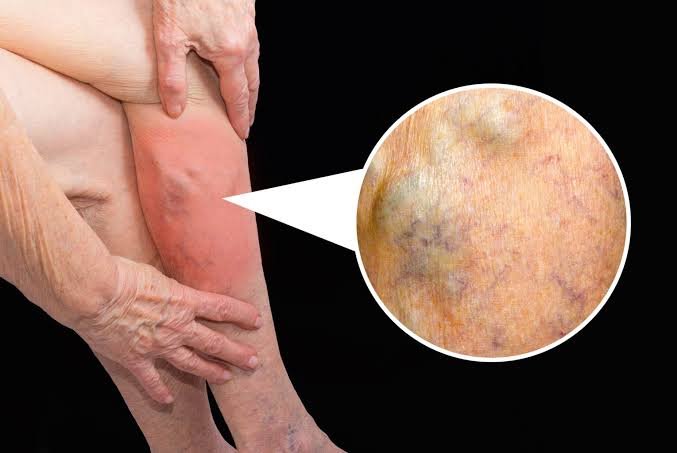
Superficial thrombophlebitis is a blood clot in a vein close to the skin, along with inflammation of that vein. Doctors also call it superficial vein thrombosis. It most often develops in varicose veins of the lower leg.
Common signs include:
- A firm, cordlike vein you can feel under the skin
- Redness or warmth along the path of the vein
- Tenderness or pain when you press on the area
- Mild swelling near the affected vein
Symptoms usually appear over a day or two. The area may look like a red streak or a hard lump along a varicose vein. Some people mistake it for a bruise or a skin infection at first.
Is Superficial Thrombophlebitis Dangerous?
In many cases, superficial thrombophlebitis stays limited and improves over a few weeks. Even so, doctors no longer treat it as a minor problem in every case.
A clot in a surface vein can sometimes extend into the deep veins. This risk is higher when the clot sits close to the groin or behind the knee. In those areas, superficial veins join the deep system. Research has also found that some patients with superficial thrombophlebitis already have a hidden DVT at the time of diagnosis.
For these reasons, doctors often order a duplex ultrasound to check the full extent of the clot. The scan shows how long the clot is, where it sits, and whether the deep veins are involved. That information guides treatment.
What Is Deep Vein Thrombosis?
Deep vein thrombosis, or DVT, is a blood clot in one of the large veins deep inside the leg, usually in the calf or thigh. These veins carry most of the blood back to the heart.
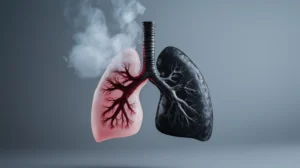
The main danger of DVT is that part of the clot can break off and travel to the lungs. This is called a pulmonary embolism, and it can be fatal. DVT can also damage the valves in the deep veins over time. This may lead to post thrombotic syndrome, which causes long term swelling, pain, and skin changes in the leg.
DVT does not always cause clear symptoms. When it does, signs may include:
- Swelling in one leg, often the whole calf or leg
- Pain or cramping, especially in the calf
- Warmth and redness of the skin
- A feeling of heaviness or tightness
Superficial Thrombophlebitis vs. DVT: Key Differences
The two conditions share some features, but several clues help tell them apart.
Location. Superficial thrombophlebitis affects veins you can often see or feel under the skin. DVT affects veins deep in the muscle that you cannot see.
Appearance. Superficial clots usually cause a visible red, tender cord along a vein. DVT more often causes general swelling of the calf or the whole leg.
Risk. Superficial thrombophlebitis is usually less dangerous, though it can extend inward. DVT carries a direct risk of pulmonary embolism.
Treatment. Mild superficial clots may need only symptom care. DVT almost always needs blood thinning medication.
Because the signs can overlap, you should never try to sort them out alone. An ultrasound gives a clear answer.
How Doctors Treat Each Condition
For small superficial clots far from the deep veins, treatment often focuses on comfort. Doctors may suggest warm compresses, leg elevation, compression stockings, and an anti inflammatory medicine if it is safe for you. Walking is usually encouraged.
When a superficial clot is long or sits close to a deep vein junction, doctors often prescribe a blood thinner for several weeks. This lowers the chance that the clot will grow into the deep system.
DVT treatment usually involves anticoagulant medication for at least three months. These medicines do not dissolve the clot directly. Instead, they stop it from growing and allow the body to break it down over time. In rare, severe cases, specialists may use procedures to remove or dissolve a large clot.
Who Faces the Highest Risk
Varicose veins are only one piece of the picture. Your risk of a clot rises further when you also have:
- Recent surgery or hospitalization
- Long trips by car or plane
- Cancer or cancer treatment
- Pregnancy or recent childbirth
- Estrogen therapy or birth control pills that contain estrogen
- A personal or family history of blood clots
- Obesity
- Limited mobility or prolonged bed rest
If you have varicose veins along with any of these factors, talk with your doctor about ways to lower your risk.
Simple Ways to Lower Your Risk
If you have varicose veins, daily habits can help keep blood moving and lower your chance of a clot.
Stay active. Walking works your calf muscles, which squeeze blood up through the leg veins. Aim for regular walks most days of the week.
Break up long periods of sitting. Stand and move around every hour at work or at home. On long trips, stop or walk the aisle every one to two hours.
Wear compression stockings. Your doctor can recommend the right pressure level. Compression supports the veins and reduces pooling.
Raise your legs. Elevating your legs above heart level for short periods helps drain pooled blood.
Drink enough water. Good hydration keeps blood from becoming too thick, especially during travel.
Manage your weight. Extra weight adds pressure on leg veins.
Talk with your doctor about medications. If you take hormone therapy or birth control with estrogen, ask whether your vein history changes the safest option for you.
What to Expect at an Ultrasound for a Suspected Clot
A duplex ultrasound is the main test for leg clots. It is quick, painless, and uses sound waves instead of radiation.
You lie on an exam table while a technician applies gel to your leg. A small probe moves over the skin and shows the veins on a screen. The technician gently presses on the veins at several points. Healthy veins flatten under pressure, while a vein with a clot does not. The test usually takes 20 to 40 minutes, and you get results quickly.
Can Treating Varicose Veins Lower Clot Risk?
Treating the faulty veins removes the slow, pooled blood flow that makes clots more likely in those vessels. People who have had repeated episodes of superficial thrombophlebitis often benefit from vein treatment once the inflammation settles.
Modern options such as thermal ablation, adhesive closure, and sclerotherapy close the diseased vein. Blood then reroutes through healthy veins. Your vein specialist will time any procedure carefully, since treatment usually waits until an active clot has been managed.
When to Get Help Right Away
Seek emergency care immediately if you notice:
- Sudden shortness of breath
- Chest pain that worsens when you breathe deeply
- Coughing up blood
- A fast heartbeat or feeling faint
These can be signs of a pulmonary embolism.
Call your doctor the same day if one leg becomes swollen, painful, warm, or red, or if a varicose vein turns hard, red, and tender. Early testing can catch a clot before it becomes more serious. With proper care, most people recover well and can take steps to protect their veins in the future.