Peripheral Arterial Disease (PAD) is a circulatory condition that reduces blood flow to the legs and lower extremities. Our clinic provides advanced and minimally invasive PAD treatment in New Jersey, focused on improving circulation, relieving pain, and preventing serious complications.
Peripheral Arterial Disease (PAD) may begin with subtle symptoms that gradually affect daily activities. Early signs often include leg discomfort, cramping, or weakness during walking, climbing stairs, or light physical activity. Some individuals may notice that their feet or lower legs feel cooler than the rest of the body, which can be an indication of reduced blood circulation.
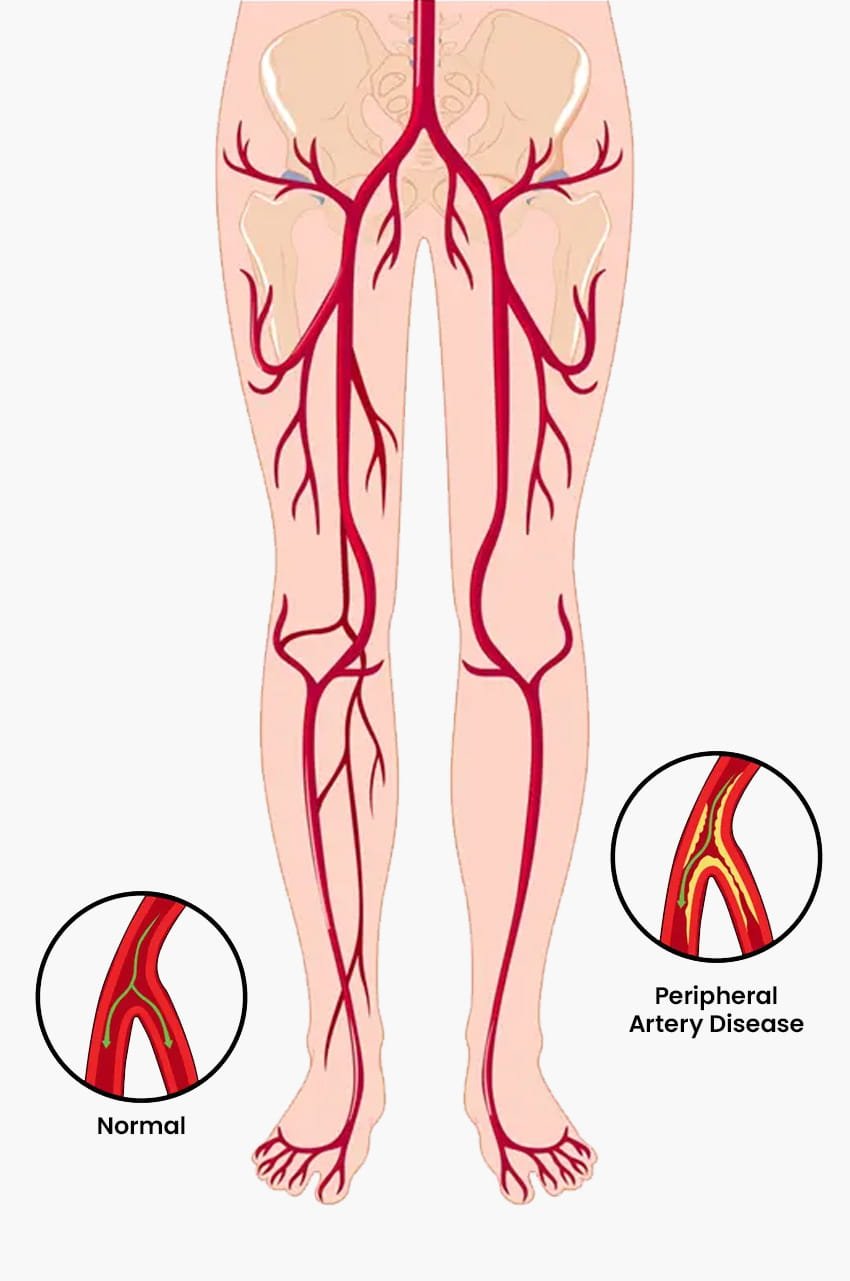
Peripheral arterial disease occurs when arteries that supply blood to the limbs become narrowed or obstructed, limiting healthy blood flow. The legs are most commonly affected. When muscles do not receive enough oxygen-rich blood, they are unable to function efficiently, leading to fatigue, pain, and decreased endurance that typically improves with rest.
Because these symptoms can resemble common muscle strain or age-related changes, PAD is frequently overlooked in its early stages. However, Peripheral Arterial Disease is a progressive vascular condition that requires proper medical assessment. Without timely PAD treatment, reduced circulation may worsen and increase the risk of complications that impact mobility, tissue health, and overall vascular function.
Not everyone with Peripheral Arterial Disease experiences noticeable symptoms in the early stages. In many cases, PAD progresses quietly until circulation becomes significantly reduced. For others, the first clear symptom is claudication, a common indicator of underlying artery disease.
Claudication refers to muscle pain or cramping that occurs during physical activity, most often while walking. It typically affects the calves but may also involve the thighs, hips, or buttocks, depending on the location of the narrowed artery. The discomfort usually subsides with rest, as the muscles no longer require increased blood flow. While leg pain is the most common complaint, the specific location of symptoms reflects where arterial narrowing is present.
As Peripheral Arterial Disease advances, symptoms may become more persistent and limiting. Severe claudication can restrict walking distance, interfere with daily activities, and negatively impact quality of life.
When artery disease extends to the upper extremities, reduced blood flow can cause symptoms in the arms such as weakness, fatigue, or cramping during movement.
In later stages of Peripheral Arterial Disease, ongoing pain may occur at rest and worsen at night. Temporary symptom relief may occur when the legs are lowered, helping blood flow through gravity. This is a sign of advanced PAD and indicates the importance of timely treatment.

Are you experiencing leg pain, numbness, or other symptoms of Peripheral Arterial Disease (PAD)? Don’t wait, early diagnosis is key. Our certified vascular surgeons offer comprehensive vascular evaluations and personalized PAD treatment plans designed to improve circulation and prevent complications.
Atherosclerosis is the primary cause of Peripheral Arterial Disease (PAD). This condition occurs when fatty deposits, known as plaque, gradually build up along the walls of the arteries. As plaque accumulates, it narrows the arteries, reducing blood flow and increasing the risk of complications.
Certain vascular infections can inflame the arteries, causing swelling, narrowing, or structural damage. These infections increase the likelihood of artery disease and can worsen circulation problems, making PAD more severe if untreated.
For some people, abnormal growth or alignment of bones, muscles, or ligaments can put pressure on nearby arteries. This persistent compression can limit blood flow to the limbs and increase the risk of developing Peripheral Arterial Disease (PAD).
Traumatic injuries to the arms or legs, such as fractures, dislocations, or deep tissue damage, can directly impact blood vessels. These injuries may result in arterial narrowing, formation of blood clots, or long term circulation problems, which can contribute to PAD and other vascular complications.
Certain factors can raise the chance of developing Peripheral Arterial Disease (PAD), a condition that reduces blood flow to the legs and arms.
A family history of heart disease, stroke, or artery problems can increase susceptibility. Additionally, individuals with existing cardiovascular issues are more likely to develop PAD.
PAD can progress into a severe and limb-threatening condition known as Critical Limb Ischemia. This occurs when blood flow to the legs or feet becomes critically reduced. At this stage, oxygen delivery to the tissues is no longer sufficient to maintain skin and muscle health.
Why Vascular Care Centers?
We use advanced diagnostic imaging and minimally invasive techniques to restore circulation whenever possible. Our priority is limb preservation, pain relief, and long-term vascular stability.
PAD is most commonly caused by plaque buildup within the arteries. When PAD is diagnosed, it often signals that Artery Disease may also be present in other critical areas of the body. Atherosclerosis is not limited to the legs. It is a systemic condition that can affect multiple vascular territories.
Why Vascular Care Centers?
Our goal is to reduce future cardiovascular risk while delivering targeted PAD Treatment. Through personalized care plans and ongoing monitoring, we help safeguard both limb and life.
Leg pain, numbness, or cramping should never be dismissed as normal aging. These may be early signs of Peripheral Arterial Disease and require proper medical evaluation. Even without symptoms, individuals over 50 or those with diabetes or high blood pressure should be assessed for PAD risk.
Diagnosing Peripheral Arterial Disease (PAD) starts with a thorough medical history and physical examination. Your doctor will assess symptoms, check blood flow in your arms and legs, and may use additional tests. Early and accurate diagnosis is essential to prevent complications and manage PAD effectively.
The doctor may advise you simple treatments if your symptoms are mild such as:
The doctor may advise you simple treatments if your symptoms are mild such as:
The doctor may advise you simple treatments if your symptoms are mild such as:
Managing Peripheral Arterial Disease begins with accurate diagnosis and careful evaluation. Our specialists use advanced, minimally invasive tests to assess blood flow and identify blockages in the arteries.
A common method that helps visualize the arteries and measure blood flow using sound waves. We are a certified Vascular Lab performing detailed ultrasound of the arteries and veins.
To help open a narrow or blocked blood vessel, an angioplasty temporarily stretches out the blood vessel, while stenting is performed to permanently hold it open