Thrombectomy/
Thrombolysis
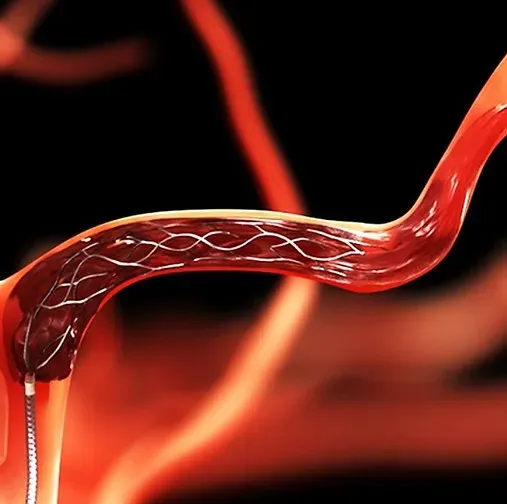
Thrombectomy/Thrombolysis is a specialized medical procedure designed to remove or dissolve abnormal blood clots that block normal circulation and can damage vital organs or tissues. Thrombectomy/Thrombolysis uses advanced X-ray imaging to guide a catheter precisely to the site of the clot. This procedure is commonly performed to reduce the risk of embolism, heart attack, and stroke, restoring proper blood flow and protecting organ function.
How Thrombectomy/Thrombolysis is performed?
Before the thrombectomy/thrombolysis, your physician will review your complete medical history and ask about any recent illnesses or medications you are taking. You may be instructed to stop blood-thinning medications prior to the procedure. Women who are pregnant or may be pregnant should inform the healthcare team, as radiation exposure can harm the fetus. You will also be asked to remove clothing and wear a hospital gown before starting thrombectomy/thrombolysis.
During the Procedure:
- You will lie comfortably on the procedure table while the healthcare team attaches electrodes to monitor your heart rate, blood pressure, oxygen levels, and cardiac rhythm during thrombectomy/thrombolysis.
- An intravenous (IV) line will be inserted to administer fluids or any necessary medications during the procedure.
- The physician inserts a catheter into the artery under sterile conditions, using local anesthesia to numb the insertion area for thrombectomy/thrombolysis.
- The catheter is carefully advanced to the site of the blockage under X-ray guidance.
- Once positioned, contrast dye is injected to create angiograms that help pinpoint the exact location of the clot. You may experience a metallic taste or mild headache during this step.
- Clot-dissolving medication is delivered through the catheter at a controlled rate using a specialized machine. The process may take several hours, with most clots dissolving within 24 hours, while some may require more time. Continuous monitoring is maintained throughout.
- In certain cases, clots may also be mechanically broken down, a method that usually does not require an extended hospital stay.
- After the clots are removed or dissolved, the catheter is withdrawn, and pressure is applied to the insertion site to prevent bleeding.
Following thrombectomy/thrombolysis, you can return to your normal daily activities. It is recommended to avoid strenuous physical activity and driving for a short period. Mild discomfort or pain may occur, which can be managed with appropriate pain relief.
At Vascular Care Centers, we specialize in advanced thrombectomy/thrombolysis procedures and vascular care. Our experienced team provides safe, minimally invasive treatments to restore blood flow and prevent complications. Schedule a consultation with our vascular experts today to discuss thrombectomy/thrombolysis and personalized care options.