Stent Placement
Stent Placement involves inserting small metallic mesh tubes designed to keep narrowed or blocked passageways in the body open. Different types of stents are used for various medical purposes, and they have transformed the treatment of conditions like coronary heart disease and other arterial blockages by reducing the need for invasive surgery.
Drug-eluting Stents versus bare-metal Stents
Some stents are coated with medication that helps prevent scar tissue formation inside the stent. These are known as drug-eluting stents and are commonly used in Stent Placement procedures because they lower the risk of restenosis (re-narrowing of the artery).
Stents without any medication coating are called bare-metal stents, and they carry a higher risk of restenosis compared to drug-eluting stents. The choice between these options depends on the patient’s medical condition and long-term treatment goals.
How are Stents placed at the site of blockage?
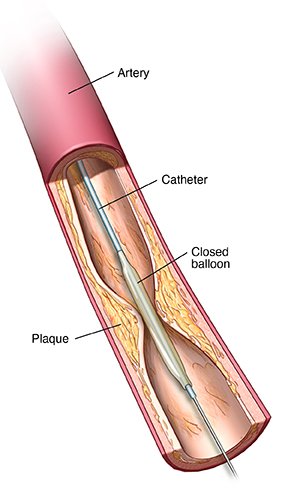
Different techniques are used for Stent Placement depending on the type of stent and the location of the blockage. For blood vessels, Stent Placement is usually performed through angioplasty, where the stent is guided to the blocked area using a balloon catheter.
Before the procedure, you may be advised to take anticoagulant medications to reduce the risk of clot formation. You will also be asked to remove clothing and jewelry and wear a hospital gown prior to the procedure.
During the Procedure:
- You will lie on the table, and a health line is inserted to inject required fluids or medication.
- Local anesthesia is injected at the site of the injection of the catheter. The catheter is inserted at the arm or groin region.
- The catheter is guided to the site of blockage with the help of radiographic techniques. You will also get proper pain management to keep you relaxed during the procedure.
- When the catheter reaches the blocked vessel, a contrast dye is injected that helps to take angiograms.
- After reaching the exact point of blockage, the balloon present at the tip of the catheter is inflated to wide open the vessel.
- The stent is placed at the position after opening the vessel.
- The stent is placed at the position after opening the vessel.
- The catheter is removed, and the insertion site is closed by sutures or applying the pressure manually.
Vascular Care Centers provides comprehensive solutions for your vascular concerns through experienced healthcare professionals and advanced Stent Placement techniques. If you have any concerns regarding vascular care or artery blockages, book an appointment now to discuss your treatment options.