
If you’ve been advised to begin hemodialysis, creating the right vascular access early can significantly improve your treatment outcomes. At our Vascular Care Centers, we provide specialized Dialysis Access Procedures, including AV fistulas, AV grafts, and tunneled dialysis catheters, to ensure safe and reliable blood flow during dialysis treatment. Early planning for dialysis access reduces complications and supports better long-term kidney care management.
If you have advanced kidney disease, your doctor may recommend preparing for dialysis before treatment becomes urgent. Planning Dialysis Access Procedures early helps avoid emergency catheter placement and lowers the risk of serious complications.
These symptoms may indicate declining kidney function and the need to begin planning for hemodialysis access. Creating access early allows time for options like an AV fistula to mature properly, helping you avoid treatment delays and improving long-term dialysis outcomes.
Kidney disease often develops gradually, and many patients may not notice symptoms until the condition has progressed significantly. Recognizing the early warning signs of declining kidney function allows you to seek timely medical care and begin planning for Dialysis Access Procedures if needed.
If you are experiencing symptoms or have risk factors requiring treatment through Dialysis Access Procedures, schedule a consultation with our vascular team today to discuss your dialysis access options and personalized treatment plan.
Dialysis access may become less effective over time due to underlying vascular conditions or mechanical complications that affect blood flow. Early detection and intervention are essential to maintain proper function and avoid interruptions in your dialysis treatment.
Clotting within the access site can restrict or completely block blood flow, making dialysis difficult or ineffective.
Scar tissue or thickening of the vessel walls may cause narrowing within the fistula or graft, reducing dialysis efficiency.
Infections can damage the access point and surrounding tissue, potentially requiring revision or replacement if not treated promptly.
Before performing a dialysis access procedure, your doctor carefully evaluates your blood vessels to choose the safest and most effective option. This may include reviewing your medical history, checking arm circulation, and using tests like ultrasound vein mapping and imaging to ensure the access site will support long-term dialysis treatment.
Ultrasound imaging is used to examine the size and condition of your veins and arteries. This helps determine whether you are a suitable candidate for an AV fistula or AV graft and identifies the best placement location.
Your vascular specialist will evaluate blood flow, vein quality, and overall circulation in your arms to assess potential access sites and detect existing vascular issues.
Conditions such as diabetes, hypertension, or previous catheter placements may affect dialysis access planning. A thorough medical history review helps guide the most appropriate Dialysis Access Procedures for your condition.
Effective dialysis begins with safe and reliable vascular access. Our specialists perform advanced Dialysis Access Procedures to create and maintain a secure connection for hemodialysis treatment, ensuring consistent blood flow and minimizing the risk of complications during your sessions.
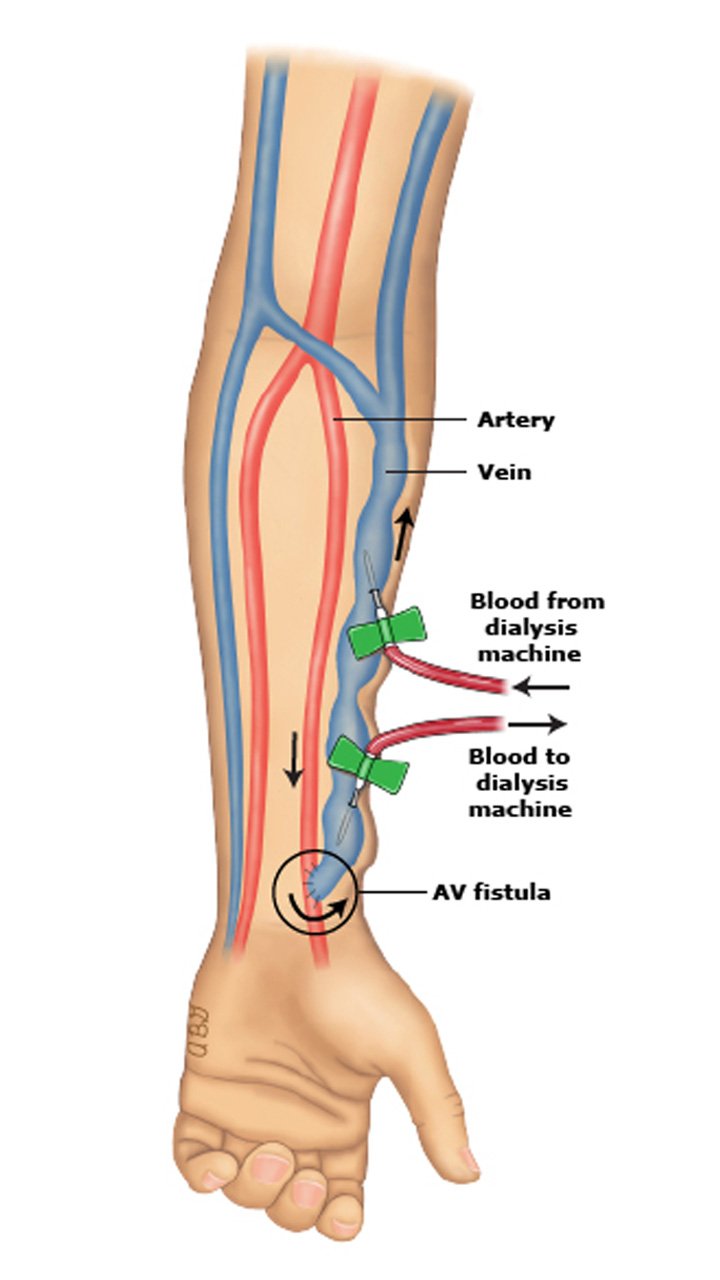
An AV fistula connects an artery directly to a vein, usually in the arm, to create strong and reliable access for hemodialysis treatment. It is the longest-lasting option, has the lowest risk of infection, and provides the best blood flow for dialysis with fewer complications over time, making it the preferred choice for long-term dialysis access procedures.
If veins are too small or weak for a fistula, a soft synthetic tube is used to connect the artery and vein to create reliable dialysis access. It can be used sooner than a fistula and serves as a good alternative when natural veins are not suitable, ensuring effective blood flow for hemodialysis treatment.
A tunneled dialysis catheter is placed into a large vein in the neck or chest to provide immediate Dialysis Access Procedures support. It is typically used when dialysis must begin immediately, when waiting for a fistula or graft to mature, or when short-term dialysis access is needed, ensuring safe and reliable blood flow for hemodialysis treatment.